
Travel shoes walking comfortable is the difference between enjoying a full day of sightseeing and counting minutes until you can sit down.
If you have ever planned a “quick museum stop” that turned into 18,000 steps, you already know the problem: a shoe can feel fine at home, then turn into hotspots, calf fatigue, or achy arches once you hit cobblestones, subway stairs, and long standing lines.
This guide focuses on what actually matters for walking-heavy trips, how to self-check fit fast, and how to match shoe types to your itinerary. No magic shoe exists, but you can get very close if you choose with your feet and your trip in mind.
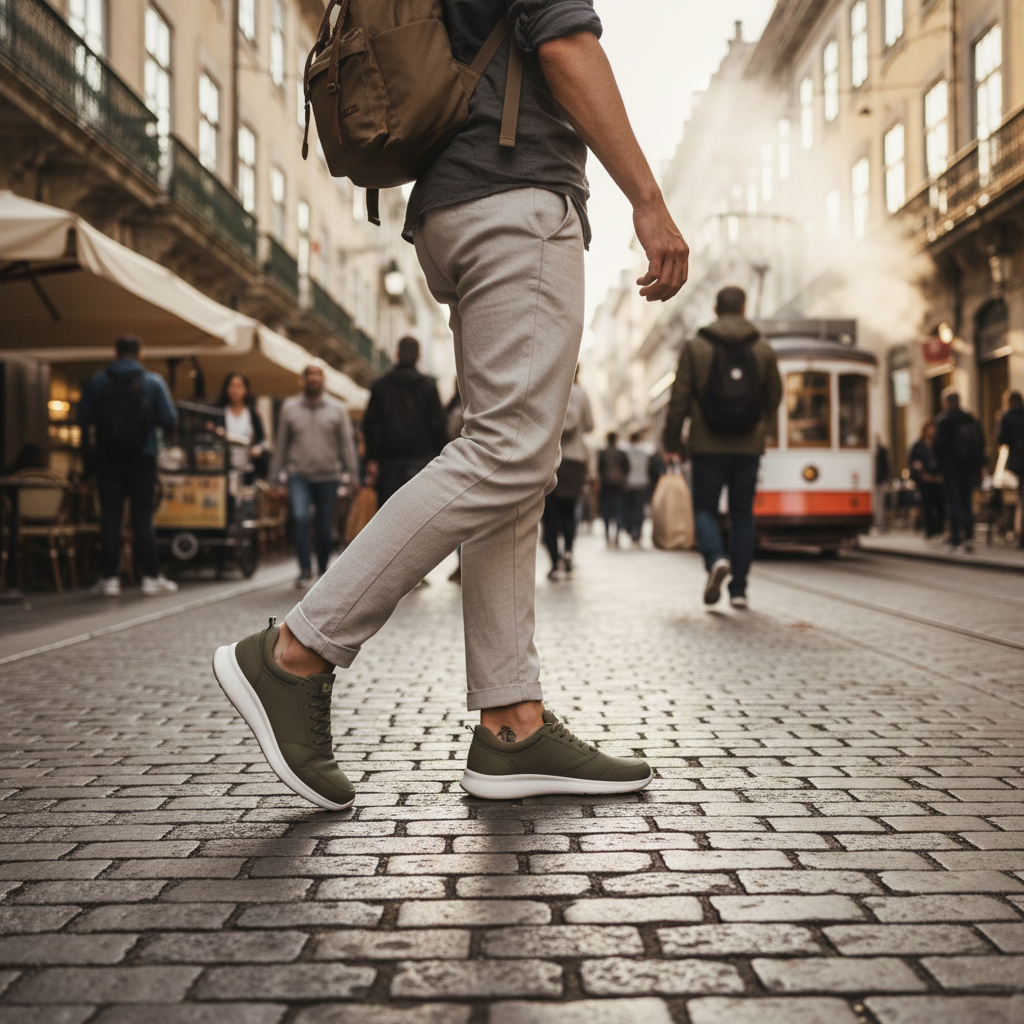
What makes a sightseeing shoe actually comfortable (not just “soft”)
Comfort for travel is not only about cushioning. A plush shoe that lets your heel slip or your forefoot slide can feel worse by day two. For sightseeing, you want a stable base that reduces strain across hours, not minutes.
- Fit and lock-in: Your heel stays put, toes can splay, and the midfoot feels held without pressure points.
- Support where you need it: Many people do better with structured midsoles and some arch support, especially on hard pavement.
- Grip and predictable traction: Wet tiles, polished museum floors, and subway steps punish smooth outsoles.
- Weight and flexibility: Too heavy adds fatigue, too floppy makes your feet work harder for stability.
- Breathability and moisture control: Hot feet swell, friction increases, blisters follow.
According to the American Podiatric Medical Association (APMA), choosing shoes that fit well and provide adequate support can help reduce foot stress during daily activity. That advice becomes even more relevant when “daily activity” turns into all-day walking on vacation.
Common reasons travel shoes feel fine at first, then fail on day two
Most “bad shoe” moments come from a few predictable mismatch points between the shoe and the trip.
- Foot swelling: Walking, heat, and flights can cause mild swelling, so a snug fit at home becomes cramped later.
- Wrong width: Many travelers buy length, then ignore width. Squeezed toes create numbness and hotspots.
- Heel slip: Tiny slipping becomes friction over hours, especially in low socks.
- Too much cushion, not enough stability: Soft foam can feel great initially, but may increase fatigue if it collapses under you.
- Outsole mismatch: City sightseeing often means hard surfaces and sudden wet patches, you need reliable rubber and tread.
- New shoes, untested socks: Even a good shoe can blister with the wrong sock seam or fabric.
If your goal is travel shoes walking comfortable all day, treat it like a system: shoe + sock + lacing + itinerary, not just a single product.
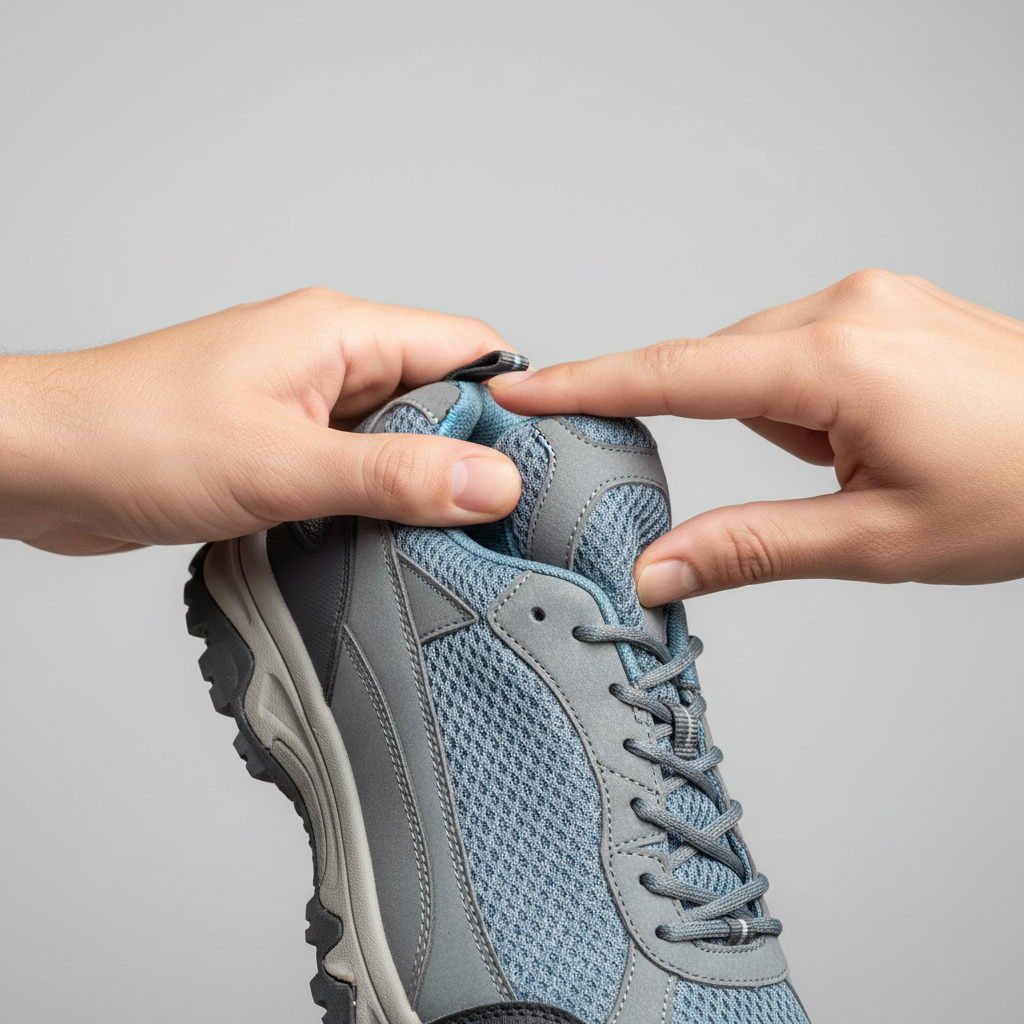
A quick self-check: are your shoes trip-ready?
You can run these checks at home in five minutes. Do them at the end of the day if possible, that is when your feet are closer to “travel swollen.”
Fit checklist (fast, practical)
- Toe room: About a thumb’s width in front of the longest toe when standing.
- Toe box shape: Toes lie flat and can wiggle, no pinching on the sides.
- Heel hold: Minimal lift when you walk upstairs; a little is okay, repeated slip is not.
- Midfoot feel: Secure but not tight; numbness or tingling is a red flag.
- Bend point: Shoe flexes near the ball of your foot, not in the middle like a taco.
Comfort stress test (the one people skip)
- Wear the shoes for a full hour indoors with your travel socks.
- Do 10 minutes of stairs or incline walking if you can.
- Stand still for 10 minutes, museum-line simulation is real.
- Afterward, check skin for red spots. Red spots predict tomorrow’s blisters.
If you fail any of these, you might still salvage the shoe with better lacing, socks, or insoles, but it is better to learn that at home than in Rome.
Choosing the right type: sneakers, walking shoes, trail hybrids, or flats?
The best sightseeing shoe depends on what “sightseeing” means for you. Ten miles in Manhattan is not the same as hill towns, gravel paths, or rainy shoulder seasons.
| Trip scenario | What to prioritize | Good shoe category |
|---|---|---|
| Big-city days (subway stairs, pavement) | Stable cushioning, good rubber grip, breathable upper | Walking sneaker or supportive running-inspired shoe |
| Old towns (cobblestones, uneven sidewalks) | Torsional stability, secure heel, slightly firmer midsole | Walking shoe or trail-to-street hybrid |
| Rainy forecast (slick sidewalks) | Traction, water resistance, quick-dry socks | Hybrid with grippy outsole; consider water-resistant uppers |
| Mixed city + light hikes | Grip and protection without heavy boots | Light trail shoe (not overly aggressive lugs) |
| Dressier dinners, lots of walking | Walkable structure, wider toe box, non-slip sole | Dress sneaker; supportive flat only if it truly fits |
Flats can work for some people, but many “cute flats” are basically thin slippers. If you go that route, look for a firm shank, real outsole rubber, and enough room for toes. Otherwise, your travel shoes walking comfortable plan turns into a pain-management plan.
Practical features worth paying attention to (and a few you can ignore)
Specs on product pages can be noisy. Here is what tends to matter in real walking miles.
- Outsole rubber coverage: More rubber often means better durability and grip than exposed foam.
- Heel counter: A structured heel cup improves stability and reduces rubbing.
- Removable insole: Helpful if you use custom orthotics or want to upgrade support.
- Lacing system: More eyelets give better lock-in; quick-laces are convenient but not perfect for every foot.
- Upper material: Mesh breathes, leather can look sharper and handle light drizzle, knits vary widely in support.
Features you can usually down-rank: extreme stack height unless you love it, “energy return” marketing, or aggressive trail lugs for purely urban trips. Those often add tradeoffs you may not want.
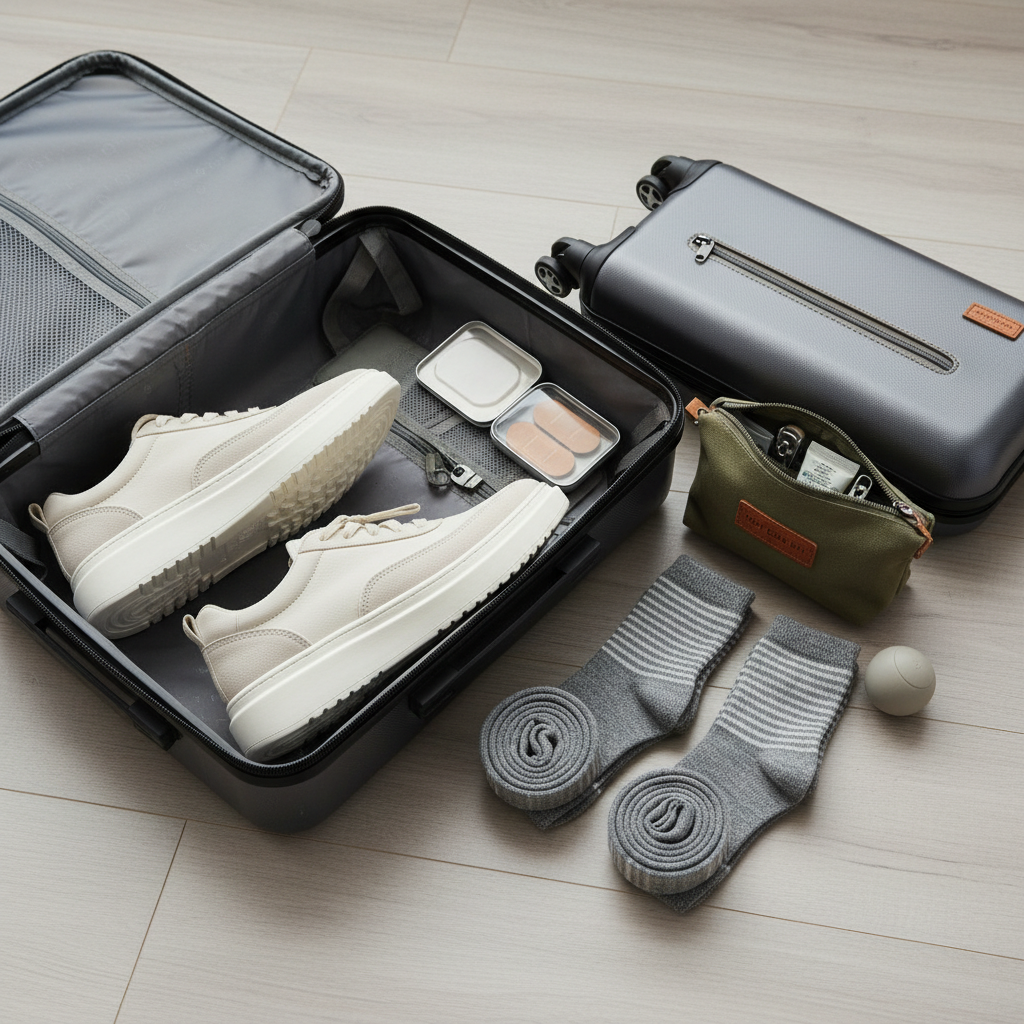
Make almost any decent shoe feel better: simple setup that works
Before you buy a second pair, fix the basics. Many travelers can noticeably improve comfort with small changes.
1) Match socks to the shoe and weather
- Choose moisture-wicking socks; cotton often stays damp and increases friction.
- Consider light cushioning under the forefoot and heel for long pavement days.
- Seams matter, if you feel a ridge at the toe, swap them.
2) Use lacing to stop heel slip
- Try a runner’s loop or heel lock lacing if your heel lifts.
- If your forefoot feels cramped, skip an eyelet over the pressure point, then lock higher up.
3) Insoles: useful, but don’t overpromise
Aftermarket insoles can help with comfort and alignment, especially for long standing. But if the shoe is too narrow or too short, an insole rarely saves it. If you have persistent pain, a podiatrist or physical therapist might recommend specific support.
4) Bring a tiny blister kit
- Blister bandages or moleskin
- Alcohol wipes (for skin prep)
- A small roll of tape
It sounds fussy, but it is the easiest way to keep a minor hotspot from ruining a day.
Key mistakes travelers make when shopping for walking-comfortable shoes
- Buying “tight because it will break in”: Some uppers soften, but length and basic shape do not change much.
- Testing only on carpet: Hard floors expose problems quickly, mimic the real surface.
- Choosing style over stride: A sleek profile is great, but not if your toes cannot spread.
- Ignoring rotation: Two pairs alternated often feel better than one pair worn nonstop, even if both are good.
- Not practicing with your day pack: Added weight changes your gait and can make support more important.
According to the Centers for Disease Control and Prevention (CDC), proper footwear can help reduce the risk of slips and falls in everyday settings. On travel days with unfamiliar surfaces, that is not just comfort, it is also basic safety.
When foot pain means you should get professional help
Some discomfort from long days is normal, sharp or worsening pain is not something to “push through.” If you notice any of the situations below, it is sensible to consult a podiatrist or other qualified clinician, especially if you have diabetes, neuropathy, or circulation concerns.
- Pain that changes how you walk, or persists after rest
- Repeated numbness, burning, or tingling
- Swelling that does not improve, or one foot swelling more than the other
- Heel pain that feels worse first thing in the morning
- Blisters or skin breakdown that keeps returning in the same spot
Comfortable travel shoes can reduce stress, but they cannot diagnose injuries. If something feels “off,” trust that signal.
Conclusion: a simple way to pick your next sightseeing pair
For most trips, the winning formula is boring in a good way: a shoe that fits your width, locks your heel, has stable cushioning, and grips well on hard surfaces. Do the end-of-day fit check, test with your real socks, and do not underestimate lacing tweaks.
Action ideas for your next trip: pick one primary walking pair and pack a lighter backup, then break both in with two to three longer walks before you fly.
FAQ
How do I choose travel shoes walking comfortable for a 3-day city trip?
Prioritize fit and traction over maximum cushion. A stable walking sneaker that holds your heel and has decent rubber coverage usually handles three days of pavement well.
Is it better to size up for travel because feet swell?
Sometimes, but not automatically. Many people do better with the correct length and a slightly roomier width, plus lacing that accommodates swelling without letting the foot slide.
Can I sightsee all day in minimalist shoes?
Some people can, especially if they are already adapted to them. If you are not used to minimalist footwear, a sudden jump during travel can increase soreness, so it is a “train first” choice.
Are water-resistant shoes worth it for sightseeing?
They can be, but they may run warmer and less breathable. For light rain, quick-dry socks and good traction can matter as much as a coated upper.
What is the best way to prevent blisters while walking on vacation?
Start with fit, then add moisture-wicking socks and address hotspots early. If you feel rubbing, stop and apply a blister bandage before it becomes a blister.
Do I need arch support for long walking days?
It depends on your foot mechanics and comfort. Many travelers feel better with moderate support on hard surfaces, but if support causes pressure, a different insole or shoe shape may be a better answer.
Should I bring two pairs of walking shoes?
If you have space, yes. Rotating pairs reduces repeated pressure in the same spots and gives shoes time to dry out, which often helps comfort over multiple days.
If you want a simpler shopping plan
If you are trying to narrow choices fast, write down your itinerary surfaces (pavement, cobblestone, rain) and your top two fit issues (wide forefoot, heel slip, high instep), then filter shoes by those needs before you look at style, you will usually end up with a pair you can actually wear from breakfast to last stop.