
How to pick first international trip comes down to one thing: choosing a destination that fits your budget, comfort level, and time off without turning planning into a second job.
Most first-time international travelers don’t struggle because they “don’t know where to go”, they struggle because every option looks amazing until you factor in jet lag, entry rules, and what your money actually buys on the ground. The right first trip is usually the one that feels a little exciting and still forgiving when plans change.
This guide gives you a simple decision framework, a quick self-check, a comparison table, and a practical step-by-step plan to book with fewer surprises. You’ll also see common mistakes I watch people make, like picking a place for photos and then realizing the transit time eats half the trip.
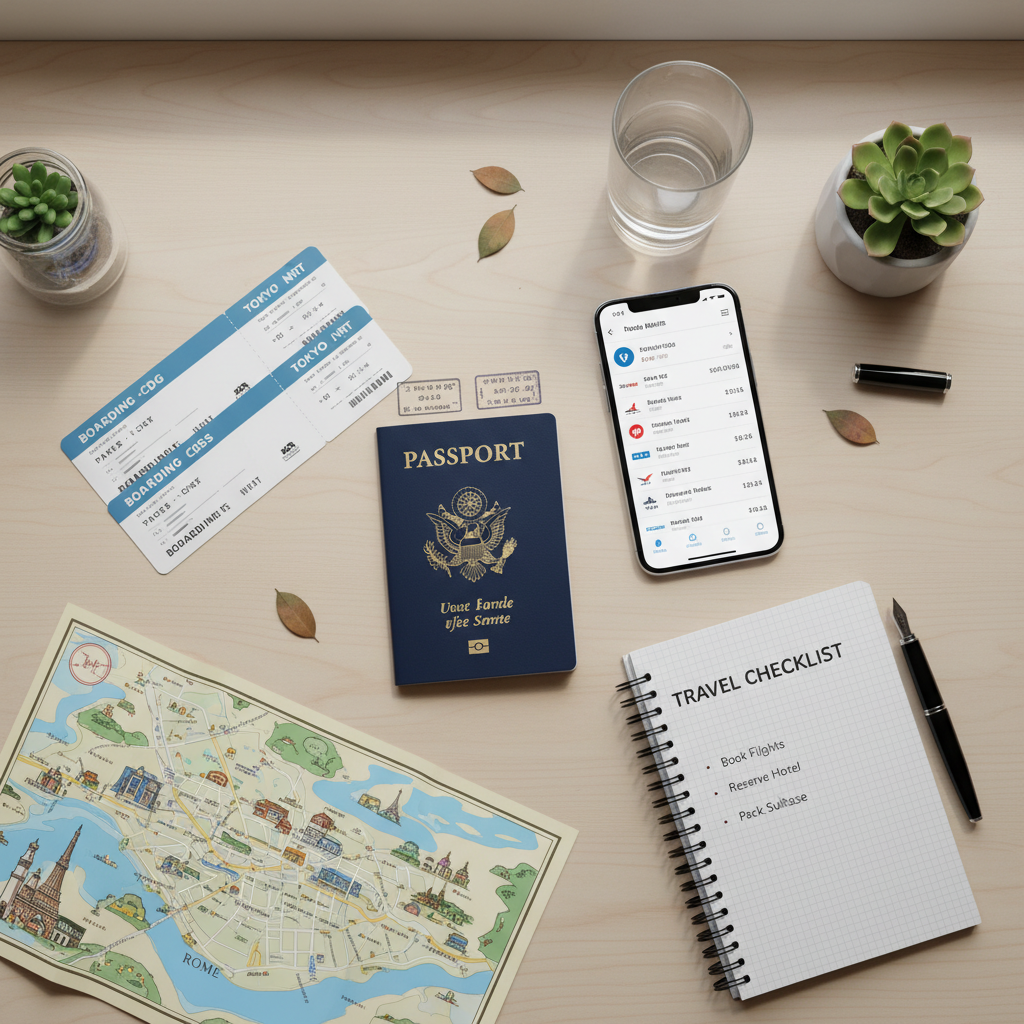
Start with your “beginner-friendly” criteria (the stuff that saves trips)
If you’re trying to decide how to pick first international trip, prioritize ease over novelty. You can do the deep-cut destinations later, when you’ve learned how you travel.
- Total travel time: Many people underestimate how a long haul flight plus connections can flatten the first two days.
- Language comfort: You don’t need English everywhere, but you do want low-friction basics like transportation signage and menu options.
- Transit simplicity: A destination with reliable public transit or easy rideshare tends to reduce stress.
- Safety and logistics: Not about fear, more about reducing “unknown unknowns” on your first run.
- Entry rules: Visas, passport validity windows, proof of onward travel, and health requirements can change, so verify close to booking.
According to the U.S. Department of State, travelers should review destination-specific advisories and requirements before departure, and keep travel documents accessible. That’s not dramatic, it’s just the unsexy part that keeps your trip smooth.
Quick self-check: what kind of first international traveler are you?
Before you fall in love with a destination, be honest about your current bandwidth. Your first international trip doesn’t need to prove anything.
A 2-minute checklist
- Trip length: Do you realistically have 5–7 days, or 10–14? Short trips prefer shorter flights.
- Sleep sensitivity: If jet lag hits you hard, minimize time zones for your first attempt.
- Planning style: Do you like schedules, or do you improvise and need forgiving infrastructure?
- Food comfort: Are you adventurous daily, or do you need familiar backup options?
- Budget stress: Would surprise costs ruin your mood, or can you float extra buffers?
- Social energy: Big cities can feel energizing or exhausting, know which one you are.
Key point: A “good” first destination often matches your weakest link, not your boldest fantasy.
Pick your destination using a simple scoring method
When everything looks good online, scoring forces a decision. Rate each destination 1–5 across the categories below, then pick the highest total that still excites you.
Categories: flight time, cost on the ground, transit ease, language comfort, weather, entry rules, and “personal pull” (how much you actually care).
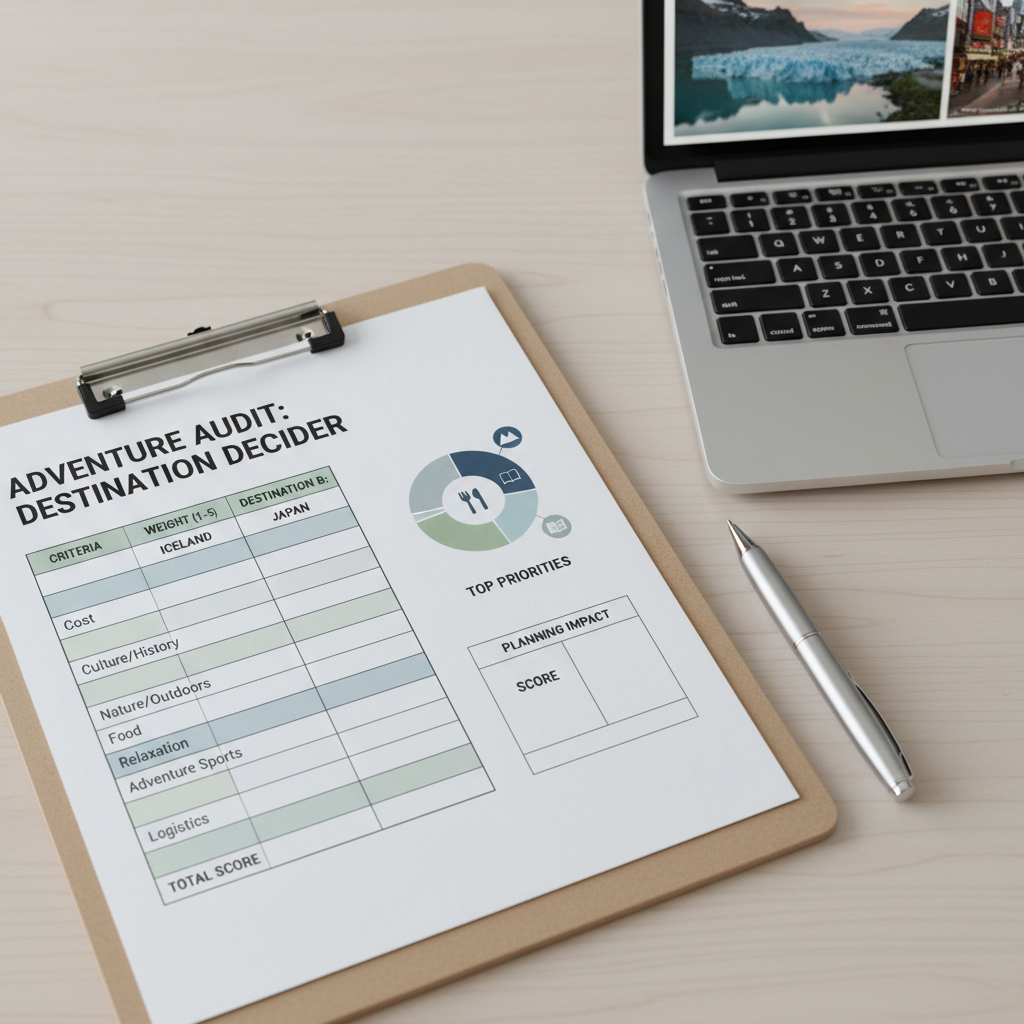
Destination fit table (use this to narrow fast)
| What you want | What to prioritize | What to avoid (for now) |
|---|---|---|
| Low stress, easy navigation | Direct flights, strong transit, lots of tourist infrastructure | Multi-stop routes, remote regions, complex internal flights |
| Best value for your dollar | Reasonable lodging, affordable food/transport, shoulder season | Peak season in high-cost cities without a budget buffer |
| Culture + comfort | One “base city” plus day trips, bilingual services | Country-hopping every 2–3 days |
| Nature and scenery | Easy hikes, guided day tours, predictable weather windows | Ambitious treks without experience or proper gear |
| Food-focused trip | Walkable neighborhoods, markets, reservations for hotspots | Overpacked itineraries that leave no room to eat slowly |
Build a first-trip itinerary that won’t collapse on day two
It’s tempting to “see it all”, but the usual first-timer regret is spending more time checking in, checking out, and sitting in transit than actually being somewhere.
A realistic first international trip structure
- Pick one main base: Stay 4–6 nights in one city or region.
- Add 1–2 day trips: Get variety without luggage churn.
- Plan only one anchor activity per day: A museum block, a food tour, a hike, a neighborhood walk.
- Leave blank space: You’ll need it for jet lag, weather, and “we found a great spot” moments.
If you’re still deciding how to pick first international trip, this “one base + day trips” rule is the closest thing to a cheat code. It keeps your first experience feeling bigger, not more chaotic.
Money reality: budget like an adult (even if you’re a fun traveler)
Budget anxiety ruins good destinations. A simple approach keeps you from nickel-and-diming yourself mid-trip.
What to price out before you commit
- Flights: Include bags, seat selection, and connection risk if applicable.
- Lodging: Add taxes, resort fees, and neighborhood transit costs.
- Local transportation: Airport transfers, metro passes, occasional rides.
- Food: Mix of sit-down meals and casual options, plus tipping norms.
- Activities: Two “paid” activities can add up fast (tours, museums, shows).
- Travel insurance: Terms vary, and coverage depends on policy details.
According to the Federal Trade Commission (FTC), travelers should read travel deal terms carefully and understand refund and cancellation conditions before purchasing. That matters more than most people think, especially with nonrefundable flights and “basic” fare classes.
Health, safety, and documents: keep it simple, stay current
This is the part people skip because it’s boring, then it becomes the only thing they talk about later. Keep it lightweight and accurate.
- Passport validity: Many countries require extra months of validity beyond your travel dates, confirm for your destination.
- Entry requirements: Visas, ETAs, or onward tickets vary, and rules can change.
- Vaccines and health notices: According to the Centers for Disease Control and Prevention (CDC), travelers should check destination guidance and recommended vaccinations before international travel. If you have medical conditions, it’s smart to ask a healthcare professional.
- Basic safety habits: Keep digital copies of documents, use hotel safes when appropriate, and stay aware in crowded areas.
Practical note: If your itinerary includes remote areas, motorbike rentals, altitude, or adventure activities, the risk profile changes, and you may want more tailored planning or professional advice.
Step-by-step: book your first international trip without overthinking
Here’s a planning sequence that avoids the classic mistake of booking one piece too early, then paying extra to force everything else to fit.
1) Lock your dates and trip length
If you have 6 days total, a 14-hour flight each way rarely feels “worth it” on a first attempt. Match the flight time to the vacation window you actually have.
2) Choose 2–3 finalist destinations
Run them through your scoring method. If two are tied, pick the one with simpler transit and fewer stops.
3) Price flights and lodging in the same sitting
Sometimes the “cheap flight” pairs with expensive neighborhoods, or the affordable hotel adds long commutes. Look at the combo, not the headline number.
4) Book the core, then add flexibility
- Book: flight, lodging, airport transfer plan
- Reserve: one must-do activity (only if it sells out often)
- Leave open: the rest, so you can adjust based on weather and energy
5) Build a “Day 1 survival plan”
Know how you’ll get from the airport to your lodging, how you’ll get food, and how you’ll handle data service. That first evening sets the tone.
Common mistakes that make a first international trip feel harder than it is
- Too many cities: Movement feels productive, but it usually steals your best hours.
- Over-indexing on Instagram itineraries: Those routes often assume unlimited energy and zero delays.
- Ignoring seasonality: Weather can quietly decide whether a trip feels magical or miserable.
- Booking the cheapest option everywhere: “Cheap” plus inconvenience can cost more in taxis, time, and stress.
- Skipping entry-rule checks: This is a painful way to learn about passport validity windows.
Key takeaway: The goal isn’t to maximize sights, it’s to maximize how calm you feel while you’re far from home.
When to get professional help (or at least a second set of eyes)
You don’t need a travel agent for every trip, but it can be useful in a few scenarios.
- Complex routing: Multiple countries, open-jaw flights, or tight connection chains.
- Special requirements: Mobility needs, medical considerations, or traveling with elderly family.
- High-stakes timing: Weddings, cruises, tours that can’t be missed.
- Uncertainty about documents: If you’re unsure about visas or entry rules, verify with official government sources, and consider professional guidance if details feel unclear.
Conclusion: How to pick first international trip is less about finding the “perfect” country and more about choosing a destination with forgiving logistics, then planning a trip shape that matches your real energy and budget. Pick one strong base, keep transit simple, price the full trip cost upfront, and you’ll come home feeling confident instead of drained.
If you want an easy next step, choose two finalists today, score them in 10 minutes, and price flight plus lodging together. By tonight you’ll probably have a front-runner, and that’s when planning starts feeling fun.