
Long flight comfort tips matter most when you want to land without the sore back, swollen feet, dry skin, and “why did I do this to myself” fatigue that can wreck day one of a trip. The good news is comfort on a long-haul flight usually comes from a few small choices that stack: what you wear, how you set up your seat, when you move, and what you drink.
A lot of travelers focus on big upgrades like premium seats, but reality is you can improve how you feel even in economy if you plan for your specific pain points, neck support, sleep, anxiety, digestion, or just staying clean on a 10+ hour stretch.
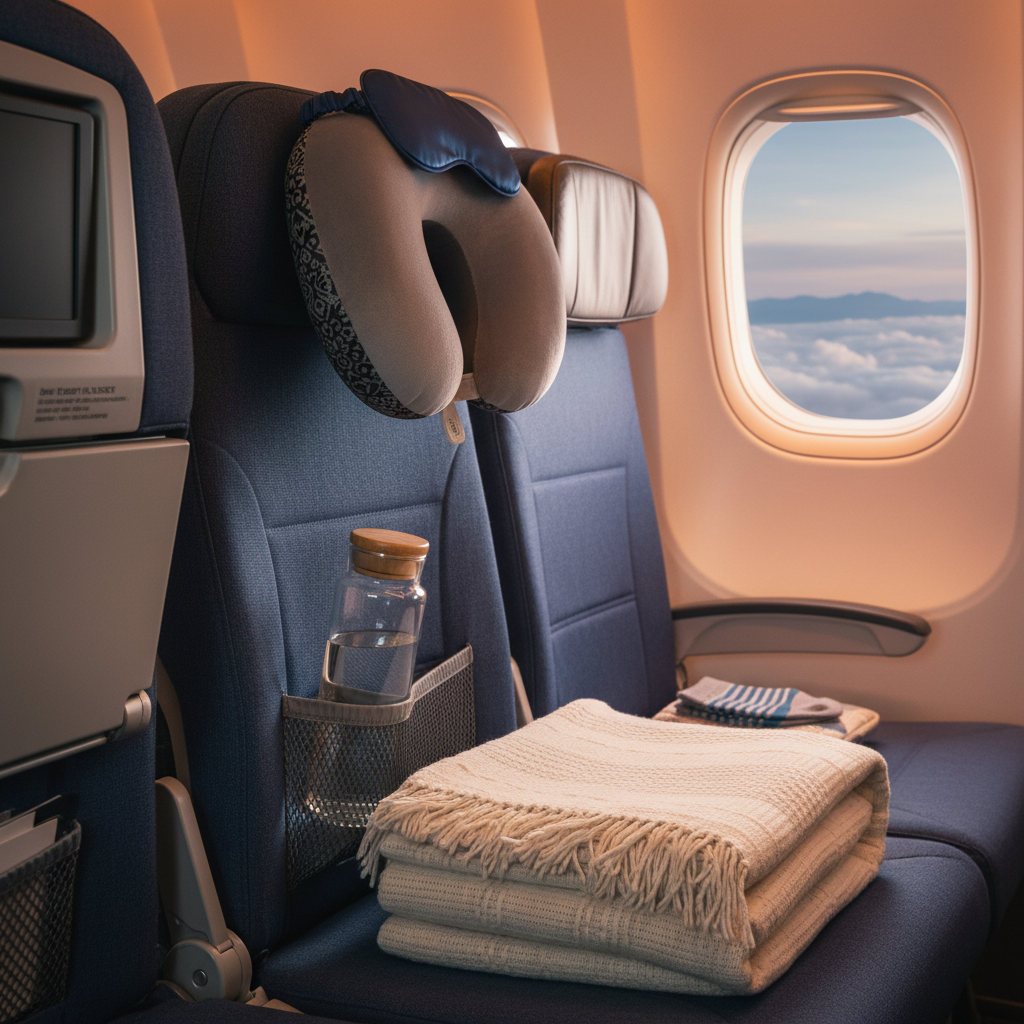
This guide stays practical: a quick self-check to figure out what’s actually making you miserable, a packing plan that avoids overstuffing, and in-seat routines you can do without turning your row into a yoga studio. I’ll also call out a few common “comfort hacks” that sound good online but backfire in real cabins.
Why long flights feel so uncomfortable (and what you can control)
Most long-haul discomfort comes from a predictable mix of cabin environment and body mechanics, plus a little bad timing. You can’t change the aircraft, but you can manage the inputs that hit you hardest.
- Low cabin humidity often makes eyes, skin, and throat feel dry, and can amplify headaches.
- Static sitting posture compresses hips and lower back, and often tightens neck and shoulders.
- Swelling in feet and ankles becomes more noticeable after hours with limited movement.
- Sleep disruption happens from noise, light, temperature swings, and awkward head position.
- Food timing plus limited movement can trigger bloating or reflux for some people.
According to the Centers for Disease Control and Prevention (CDC) guidance on travel health, moving around and exercising calf muscles during long trips can help reduce the risk of blood clots, especially for people with added risk factors. Comfort and safety overlap here, even if your main goal is simply “arrive less wrecked.”
A quick self-check: what type of discomfort hits you first?
If you try to fix everything at once, you’ll overpack and still feel off. Pick your top two issues and prioritize around them.
- Neck pain: your head drops forward or sideways when you doze.
- Lower-back pressure: you keep shifting, can’t find a neutral spine position.
- Cold sensitivity: you get chilled, can’t relax, sleep stays shallow.
- Swelling: shoes feel tight, ankles puff, legs feel heavy.
- Dryness/headaches: you feel “deserted,” especially eyes and sinuses.
- Anxiety/restlessness: you keep checking the map, can’t settle into a routine.
- GI discomfort: bloating, reflux, or nausea after meal service.
Key point: your “comfort kit” should match your pattern. A neck pillow won’t solve foot swelling, and extra snacks won’t fix back pain.
What to pack for comfort (without dragging a suitcase into your seat)
Long flight comfort tips work best when your items are reachable. Aim for a small pouch you can grab quickly after takeoff, plus a second layer in your personal item.
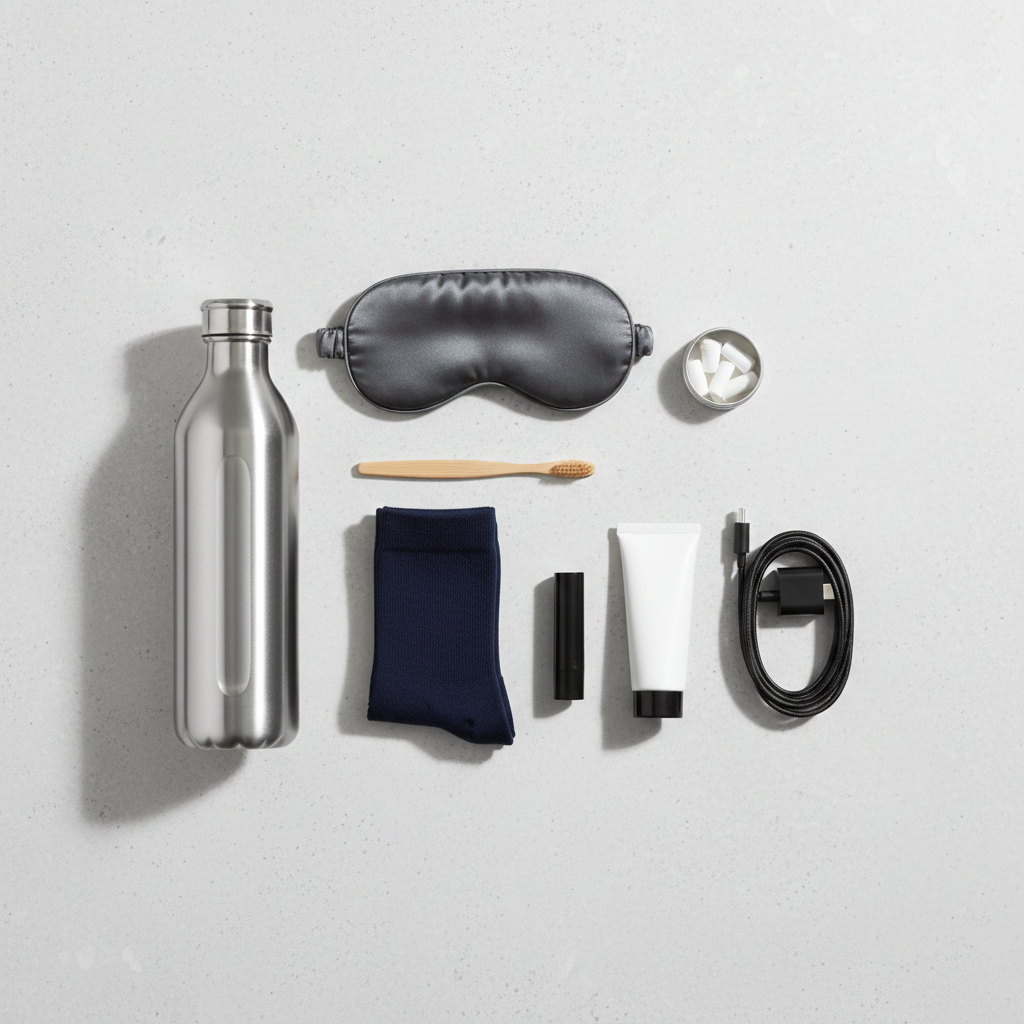
Comfort essentials most people actually use
- Eye mask that blocks light fully, not just “cute.”
- Earplugs or noise-canceling headphones (whichever you’ll tolerate for hours).
- Layers: a breathable base plus a warm mid-layer, cabins swing cold.
- Refillable water bottle (fill after security), easier than chasing tiny cups.
- Lip balm + basic moisturizer, especially if you’re prone to irritation.
- Simple wipes for hands/face, useful before sleep and before landing.
If you have specific issues, add one targeted item
- For neck pain: a supportive travel pillow that fits your sleep style (more on that below).
- For lower back: a small lumbar support cushion, or even a rolled layer you already packed.
- For swelling: compression socks, often helpful on longer segments; if you have medical conditions, ask a clinician what level is appropriate.
- For dry eyes: preservative-free artificial tears can help some travelers, but check with an eye-care professional if you use contacts or have eye conditions.
Skip packing “maybe” items that you won’t reach midflight, that’s how your footwell becomes a storage locker and your knees pay the price.
How to set up your seat for real comfort (even in economy)
The goal is a stable posture you can hold without bracing. Most discomfort starts when your pelvis slides forward and your head hunts for support.
Seat setup in 90 seconds
- Start with hips: sit back so your pelvis reaches the seatback, then add a thin lumbar roll if you feel your lower back rounding.
- Feet grounded: if your feet dangle, use a small bag as a footrest to reduce hamstring pull.
- Neck support: choose a pillow that prevents head drop, not one that just fills space. Many people do better with a firmer, taller side support than a soft donut.
- Armrest diplomacy: claim one armrest confidently and relax your shoulders, shrugging for hours adds tension fast.
Picking a seat when you still have a choice
- Aisle works well if you prioritize movement and bathroom access.
- Window helps if you want a wall to lean on and fewer disruptions.
- Exit row can add legroom, but comes with restrictions and sometimes fixed armrests.
Many long flight comfort tips ignore the simplest win: keep your “grab items” in the seat pocket or a slim pouch under the seat, so you’re not twisting and reaching every 20 minutes.
Movement and circulation: the low-effort routine that pays off
You don’t need a full workout. What helps is frequency, not intensity, especially if you’re stiff-prone.
According to the CDC, travelers can reduce clot risk by getting up and walking around when possible and by exercising calf muscles while seated. If you have a history of clots, recent surgery, pregnancy, or other risk factors, it’s wise to discuss travel plans with a medical professional.
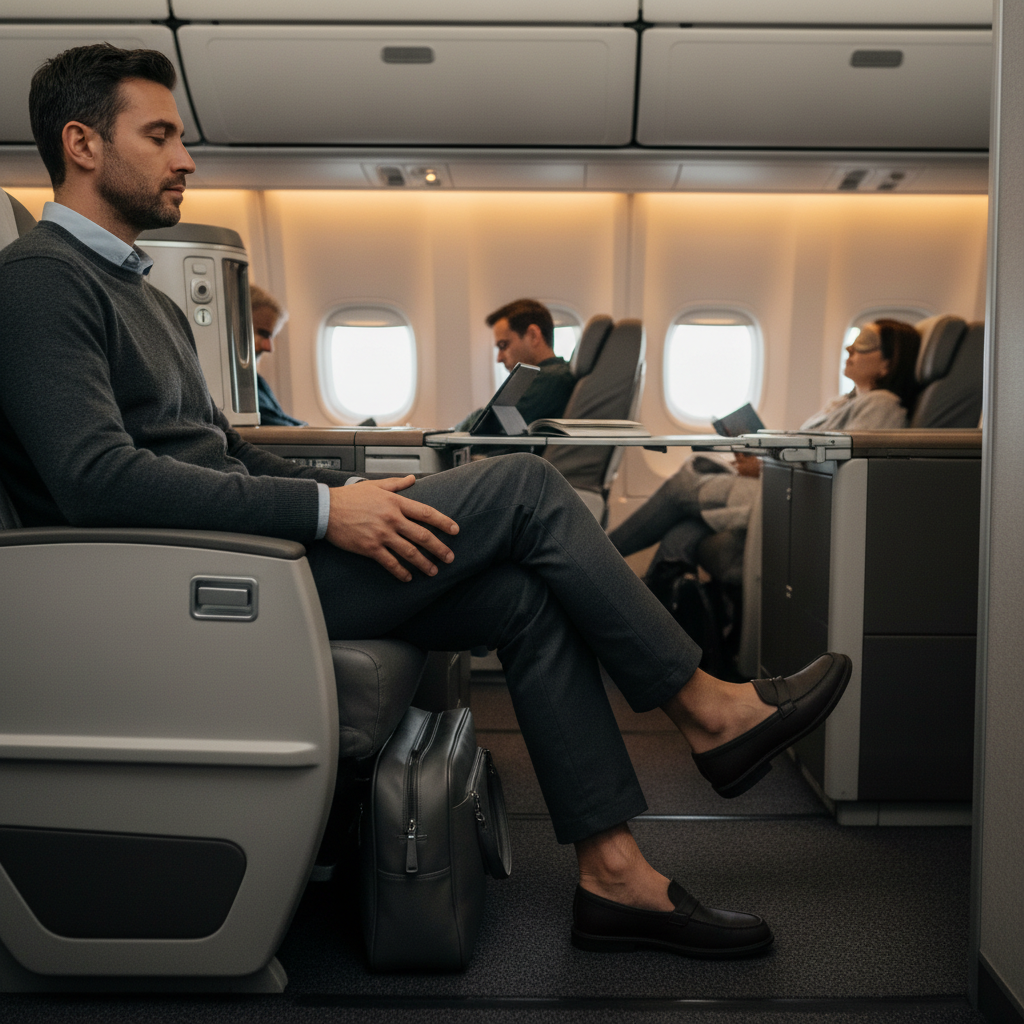
Simple in-seat moves (do what’s comfortable and discreet)
- Ankle circles: 10 each direction per side.
- Calf pumps: press toes down, then heels down, repeat 20 times.
- Knee lifts: lift one knee slightly, hold 3 seconds, switch sides.
- Shoulder reset: roll shoulders back and down, then relax jaw.
A realistic schedule
- Every 30–60 minutes: small in-seat movement.
- Every 2–3 hours if possible: stand, walk a minute, refill water.
If you’re seated at the window and hate climbing over neighbors, build comfort around fewer but more meaningful breaks, like after meal service and before you try to sleep.
Sleep strategy: make it easier to doze, not perfect
Airplane sleep is often fragmented, and that’s normal. The win is reducing “micro-annoyances” that keep waking you up.
Dial in the sleep environment
- Light control: eye mask beats blanket-over-head improvisation.
- Sound control: earplugs under headphones can be too much for some people, test at home.
- Temperature: keep one warm layer accessible, cold spikes wake you fast.
- Seat cues: tell your body it’s sleep time by setting the same routine each flight.
Neck pillow reality check
- If your head falls forward, try a pillow with chin support or a higher front profile.
- If your head falls sideways, look for firmer side bolsters and consider leaning toward the window with a soft buffer.
- If you overheat easily, choose breathable fabric, warmth can ruin sleep faster than noise.
For sleep aids or supplements, it’s smart to be cautious. Effects vary, interactions happen, and alcohol can worsen dehydration and sleep quality. If you’re considering medication, asking a clinician or pharmacist tends to be the safest move.
Food and hydration: comfort without the bloated, foggy landing
Most people already know “drink water,” but execution is where it breaks. You want steady intake without constantly disrupting your rest.
A practical hydration approach
- Bring an empty bottle through security and fill it.
- Take small sips regularly, especially when you notice dry mouth or headache.
- Go easy on alcohol, it often makes jet lag and dryness feel worse.
Eating choices that often feel better midair
- Pick lighter meals before you try to sleep, heavy/fatty options can trigger reflux for some travelers.
- Pack a simple snack you know sits well, especially if you get “hangry nausea.”
- If you’re sensitive to sodium, watch salty snacks; swelling can feel worse.
According to the Federal Aviation Administration (FAA), cabin pressure and low humidity contribute to dehydration symptoms for some passengers, so steady fluids and limiting alcohol can support comfort. Individual needs vary, especially with medical conditions.
Quick-reference table: match the problem to the fix
If you want a fast plan, use this as your pre-boarding checklist and adjust based on what you know about your body.
| Common problem | What usually helps | What often backfires |
|---|---|---|
| Neck pain | Firmer side support, window lean strategy, eye mask for deeper dozing | Overstuffed soft pillow that pushes head forward |
| Lower-back pressure | Small lumbar roll, feet supported, hips all the way back | Sitting on a bulky cushion that raises knees too high |
| Swollen feet | Walk breaks, calf pumps, looser shoes, compression socks if appropriate | Crossing legs for long stretches, tight laces |
| Dryness/headache | Refillable bottle, lip balm, moisturizer, reduced alcohol | Relying only on cabin drinks, too much caffeine |
| Poor sleep | Mask + earplugs, warm layer, routine after meal service | Fighting for “perfect” sleep and staying tense |
Common mistakes that waste effort (or make you feel worse)
- Overpacking the personal item, then contorting to access items midflight.
- Trying new gadgets on flight day, test pillows, masks, and headphones at home.
- Staying still to avoid bothering others, movement pays off more than politeness guilt.
- Relying on alcohol for sleep, it may knock you out but often leads to fragmented rest.
- Ignoring persistent pain, “pushing through” can turn a manageable ache into a multi-day issue.
One more reality check: if you’re uncomfortable, it doesn’t mean you packed wrong or did something “bad.” Long flights are a stressor, your goal is to reduce friction, not achieve spa-level comfort at 35,000 feet.
When to consider professional advice
Most discomfort is normal, but certain patterns deserve extra caution. If you have medical risk factors for blood clots, significant swelling, severe anxiety, or chronic pain conditions, it’s reasonable to ask a clinician for travel-specific guidance.
- New or severe leg swelling, especially one-sided swelling or pain, should be evaluated promptly.
- Breathing issues, chest pain, or fainting are not “normal flight stuff,” seek urgent care.
- Sleep medication questions: talk with a clinician or pharmacist, especially if you take other meds.
Conclusion: a simple plan for your next long-haul flight
The most reliable long flight comfort tips come down to a repeatable routine: set up your seat for neutral posture, keep a small comfort kit within reach, sip fluids steadily, and move a little more often than you think you need. You won’t control every noise or bump, but you can control the basics that determine how you feel when wheels hit the ground.
If you want an easy next step, pick two upgrades for your next flight, one for sleep (mask/earplugs/pillow strategy) and one for circulation (movement plan or socks if appropriate), then keep everything else simple so you can actually follow through.
FAQ
What are the best long flight comfort tips if I’m stuck in economy?
Prioritize seat setup and access: hips back with light lumbar support, feet supported, then mask and earplugs for sleep. Add small movement breaks and steady water intake, those changes usually beat bulky gadgets.
How often should I get up on a long flight?
Many travelers feel better with a short walk every couple of hours, plus small in-seat calf and ankle movements more frequently. If you have health risk factors, a clinician can suggest a safer schedule.
Do compression socks actually help on long flights?
They can help with swelling for some people, and they’re commonly recommended for long travel in certain situations. Fit and compression level matter, so if you have circulation issues or medical conditions, check with a professional.
How can I sleep on a plane without waking up with neck pain?
Choose support based on how your head falls when you doze, forward droop needs different support than sideways tilt. Mask + warmth helps you stay asleep long enough for the pillow to matter.
Is it better to choose an aisle or window seat for comfort?
Aisle usually wins for people who need to move often, while window often works for people who can sleep leaning toward the wall. If you’re prone to stiffness or swelling, aisle tends to be more forgiving.
What should I drink to feel better after a long flight?
Plain water is the simplest baseline, sipped regularly. Alcohol can make dryness and poor sleep feel worse, and too much caffeine can increase jittery discomfort, so balance based on how your body reacts.
What if anxiety is my main issue on long-haul flights?
Build a predictable routine: set up your seat, choose one calming activity, and schedule movement breaks so time feels structured. If anxiety feels intense or interferes with travel, talking with a mental health professional can be helpful.
How do I avoid bloating on a long flight?
Many people do better with lighter meals before sleep, fewer carbonated drinks, and regular movement. If you have reflux or GI conditions, consider discussing travel triggers with a clinician.
If you’re planning a long-haul trip and want a more personalized comfort setup, it can help to map your top two discomfort triggers to a packing list and an in-seat routine, then test the basics on a shorter flight so your next long segment feels more predictable.