
Best travel laundry detergent sheets solve a very specific travel problem, you want clean clothes without packing a liquid bottle that leaks, gets flagged at TSA, or takes up half your toiletry bag.
Sheets can be genuinely convenient, but not all of them work the same. Some dissolve fast in cold water, others leave little bits, some handle body odor well, others struggle on sunscreen and food stains. If you have ever done “sink laundry” in a hotel and still smelled yesterday’s hike, you already know why picking the right sheet matters.
This guide walks through what to look for in 2026, how to match sheets to your trip style, and a quick comparison table that makes it easier to decide without overthinking it.
What makes a laundry detergent sheet “travel-friendly” in real life
The marketing usually says “lightweight, mess-free,” which is true, but travel-friendly also means it behaves well under travel constraints: tiny sinks, cold water, hard water, and limited time to rinse.
- Dissolves in cold water: Many hotel sinks run lukewarm at best, and cold-water dissolvability saves frustration.
- Low residue: Less leftover film means less rinsing, helpful when you only have a trickle of water.
- Odor control: Gym clothes and merino baselayers need deodorizing, not just “smells like perfume.”
- Pack robustness: Sheets that crumble in humidity can turn into dust inside your pouch.
- Versatility: Hand-wash, quick machine cycle, spot cleaning, sometimes even as an emergency pre-treat.
According to U.S. Transportation Security Administration (TSA)... liquids, gels, and aerosols in carry-ons must follow the 3-1-1 rule, which is why many travelers prefer dry detergent formats for carry-on-only trips.
Quick comparison: how to choose the best travel laundry detergent sheets for your trip
There is no single winner for every traveler, so think in scenarios. A weekend city break is different from a multi-week trek where you wash every night.
| Travel scenario | What matters most | What to prioritize in sheets | What to watch out for |
|---|---|---|---|
| Carry-on only, 3–7 days | Zero leaks, minimal space | Individually cut sheets, quick dissolve | Overly strong fragrance in tight hotel rooms |
| Backpacking, frequent sink washes | Cold water performance | Low residue, easy rinse, odor control | Sheets that need hot water to dissolve fully |
| Family travel, more laundry volume | Cost per wash, availability | Sheets that can be halved, consistent cleaning | Needing 2–3 sheets per load quickly adds cost |
| Sensitive skin traveler | Comfort, fewer irritants | Fragrance-free options, minimal additives | Assuming “eco” always equals gentle |
| International travel (hard water common) | Reliable clean in tough water | Better surfactant blend, stronger rinseability | Waxy residue on dark synthetics |
Key criteria that separate “okay” sheets from truly good ones
If you are comparing products online, you rarely get to test dissolve time and rinsing. These criteria help you infer performance from packaging and practical cues.
1) Dissolve speed and water temperature tolerance
For hand-wash travel, quick dissolve in cold-to-lukewarm water is the make-or-break factor. If a sheet only works well in hot water, it is a poor fit for sink laundry and many hostels.
2) Cleaning strength: body oils, deodorant, sunscreen
Most sheets handle light soil fine. The gap shows up on oily stains and sweaty synthetics. If you travel for hiking, theme parks, or long summer days, choose sheets positioned for “deep clean” rather than only “gentle refresh.”
3) Scent approach: fragrance-free vs scented
A light scent can make travel laundry feel fresher, but strong perfume in a small room can be too much. If you are scent-sensitive, go fragrance-free and bring a tiny fabric spray if you still want “fresh.”
4) Packaging and humidity resistance
Look for a resealable pouch or a way to store sheets in a dry barrier bag. In humid climates, some formulas can soften or clump, which makes dosing messy.
5) Skin sensitivity and ingredient expectations
People often assume “plant-based” automatically means non-irritating, but reactions vary by person. According to U.S. Food and Drug Administration (FDA)... some people may experience skin irritation from ingredients in cosmetics or household products, and it can be wise to patch-test when you are sensitive. If you have a history of dermatitis, a fragrance-free option and a cautious test wash are usually safer, and complex concerns merit asking a clinician.
A fast self-check: which type of traveler are you?
This is the part most buyers skip, then they blame the sheet when it fails their specific use case.
- Mostly hotel machines: you need sheets that work for standard loads and dissolve without residue in a drawer dispenser or drum.
- Mostly sink laundry: you need fast dissolve, low residue, and easy rinsing.
- You rewear technical fabrics: you need odor control and solid rinse-out so synthetics do not get that “stale” smell.
- You travel with kids: you need stain help and flexible dosing, plus a pouch that survives rough handling.
- You have sensitive skin: you should prioritize fragrance-free and do a quick test before committing on a long trip.
If you do not want to think about it, pick based on your “most frequent” scenario, not the most extreme one.
How to use detergent sheets while traveling (sink, shower, or machine)
Using sheets looks obvious, but small technique tweaks change results a lot, especially for hand-wash.
Sink or basin method (best for daily refresh)
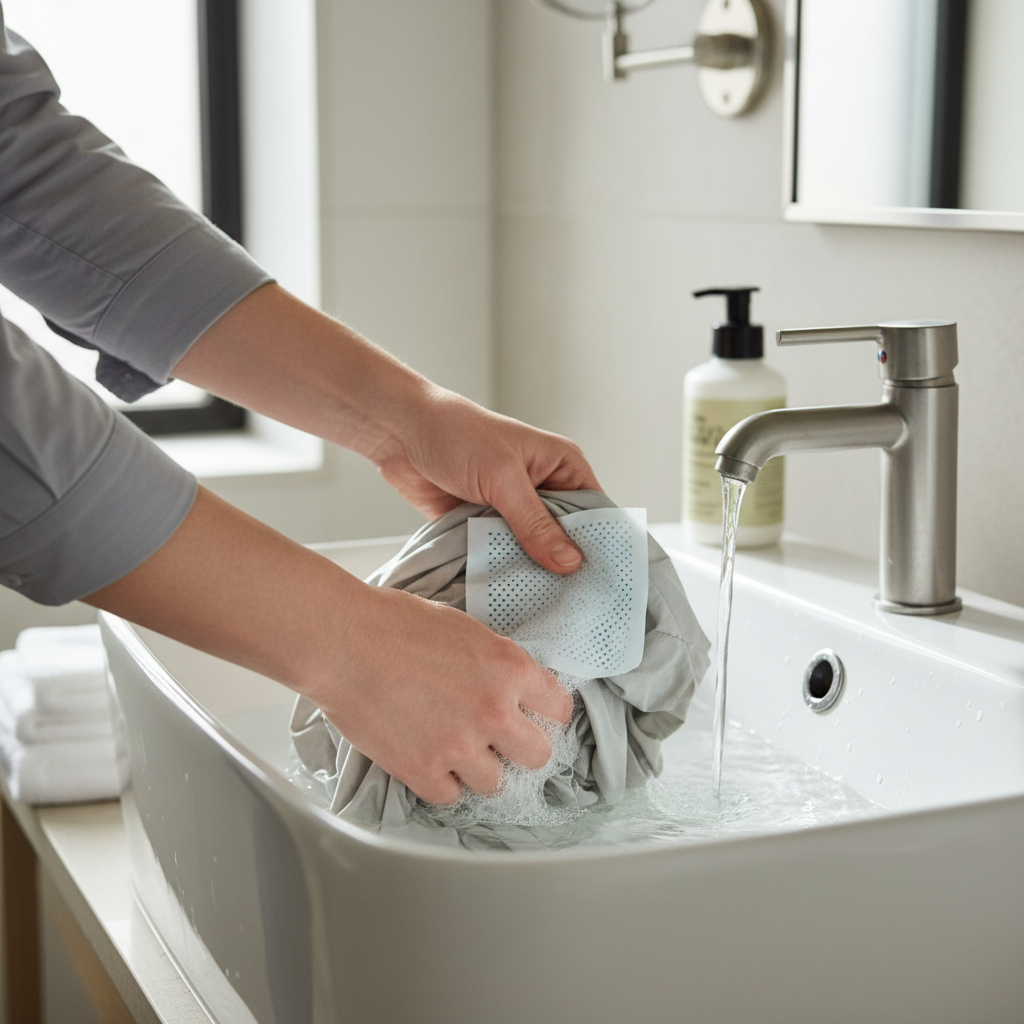
- Fill with lukewarm water when possible, cold works if your sheet dissolves well.
- Add half to one sheet for a small item load, dissolve it fully with your hand.
- Soak 10–20 minutes for sweat and deodorant buildup, then gently agitate.
- Rinse longer than you think, residue is what makes fabrics feel stiff.
- Roll items in a towel to remove water, then hang with airflow.
Shower “stomp wash” method (useful in a pinch)
If your accommodation has no sink stopper, a dry bag or a clean shower floor can work. Dissolve the sheet in a small amount of water first, then add clothes, otherwise you may get uneven distribution.
Machine method (hotel laundry rooms, Airbnbs)
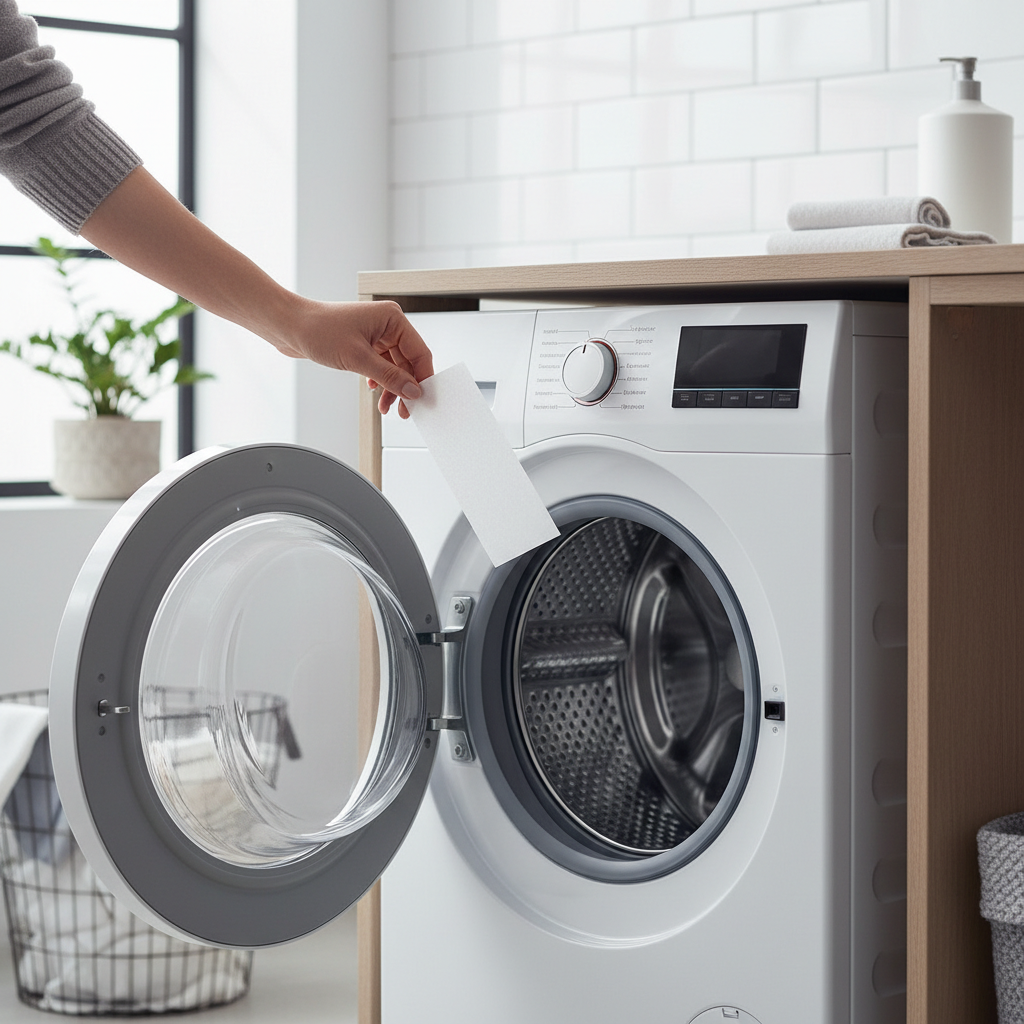
- Put the sheet in the drum before clothes if you worry about dispenser clogs.
- Use 1 sheet for small loads, more for larger or dirtier loads, but avoid overdosing since extra surfactant can increase rinsing needs.
- Choose an extra rinse if you notice residue on dark fabrics.
Common mistakes that make sheets seem “weak”
Most disappointment comes from a mismatch between expectations and how sheets behave in travel conditions.
- Not dissolving first for sink laundry: tossing a sheet on top of clothes can leave undissolved fragments trapped in fabric folds.
- Too much clothing in too little water: detergent needs room to circulate, otherwise you get spotty cleaning.
- Skipping soak time: sweat and deodorant often need contact time, quick dunking rarely works.
- Expecting full stain removal: for set-in stains, you may still need spot treatment or a laundromat wash.
- Over-fragranced “clean”: strong scent can mask odors briefly, but it does not always equal cleaner fibers.
So what is the best travel laundry detergent sheets pick for 2026?
The practical answer: the best travel laundry detergent sheets for you are the ones that match your wash method and tolerance for scent, and that reliably dissolve in the water temperature you actually get on the road.
If you mainly do sink washes, prioritize cold-water dissolve and low residue even if it costs a bit more per load. If you mostly use machines, you can lean toward stronger cleaning and flexible dosing. And if you are sensitive to fragrance, go fragrance-free and test before you fly, that small step saves a surprising amount of annoyance later.
Action ideas: pack 3–6 sheets in a zip pouch for a short trip, do one trial wash at home, then adjust your “sheet per wash” habit so you are not guessing mid-trip.
When to get extra help (or switch approaches)
If you have severe skin reactions, persistent rashes, or respiratory sensitivity to fragrances, it is sensible to stop using the product and consult a medical professional. For specialty gear like waterproof-breathable shells or down items, consider using a product designed for technical outerwear or follow the garment care label, since some detergents can affect performance coatings.
FAQ
Are laundry detergent sheets TSA-friendly for carry-on bags?
In many cases, yes, because sheets are typically treated as a dry solid rather than a liquid. Rules can change and screening varies, so if you are unsure, check current guidance on the TSA site before you fly.
Do detergent sheets work in cold water when traveling?
Some do, some struggle. If cold-water washing is your norm, look for sheets that explicitly claim cold-water performance and test once at home so you know how fast they dissolve.
How many sheets should I pack for a one-week trip?
If you plan 2–3 sink washes, packing 4–8 sheets is usually comfortable because you can use half sheets for small loads. If you expect heavy sweating or family laundry, bring more so you are not tempted to underdose.
Can I use laundry detergent sheets for hand-washing underwear and bras?
Often yes, but use less than you think and rinse thoroughly. For delicate items, fragrance-free sheets and shorter soak times can be gentler, and you should still follow garment care guidance.
Why do my clothes feel stiff after using detergent sheets?
That feeling is commonly residue from incomplete rinsing or overdosing. Use more water, dissolve the sheet fully before adding clothes, and add an extra rinse cycle if you are using a machine.
Do detergent sheets remove tough stains like grease or sunscreen?
They can help, but tough oily stains often need spot treatment. A simple travel trick is rubbing a tiny dissolved amount directly onto the stain, waiting a few minutes, then washing, though results vary by fabric.
Are “eco” detergent sheets always safer for sensitive skin?
Not always. “Eco” can describe packaging or ingredient sourcing, but sensitivity depends on the full formula and your skin. If you react easily, fragrance-free and a cautious test run matter more than the label.
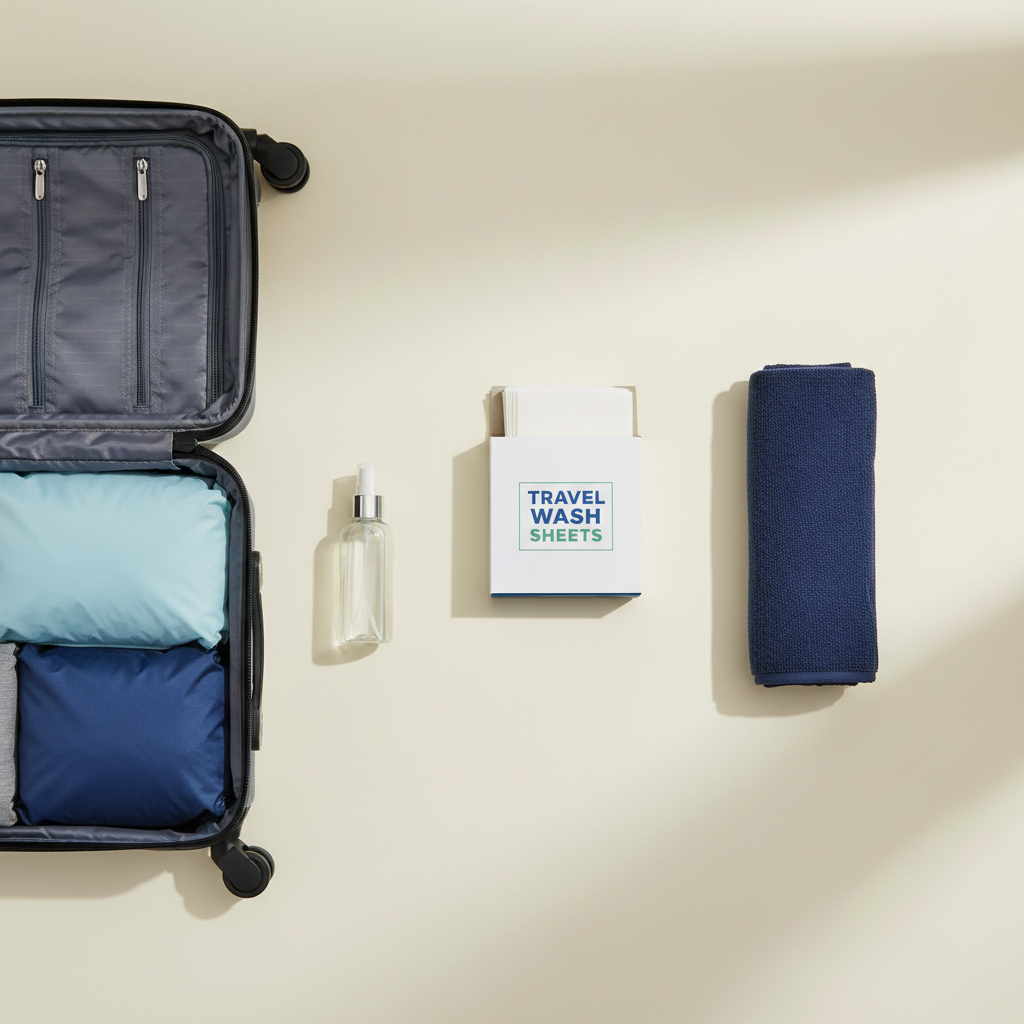
If you are trying to build a simple travel laundry kit, start by choosing sheets that match your wash style, then pair them with a small sink stopper or dry bag and a quick-dry towel, it is a modest setup that usually makes travel packing and mid-trip laundry much less annoying.