
Best travel pillow for long flights choices come down to one thing: can your head rest without your neck fighting it for six to twelve hours. If you land with a sore jaw, a stiff trapezius, or that “crooked selfie” posture, your pillow probably doesn’t match your seat position, sleep style, or neck length.
This is worth sorting out because airplane sleep is already working against you, upright seat angle, limited recline, changing cabin temps, and constant micro-wake-ups. A good pillow won’t create perfect sleep, but it can reduce how often you jolt awake and how tense you feel when you stand up.
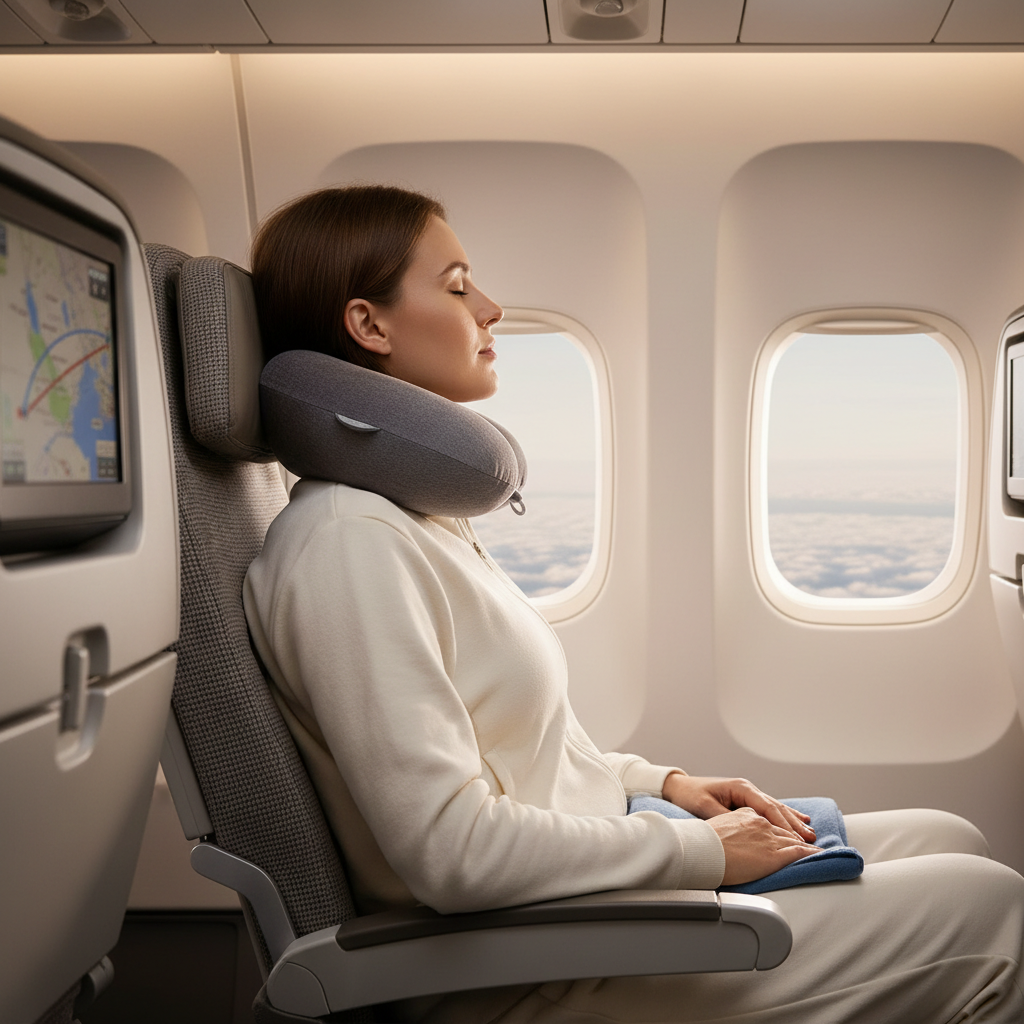
One common mistake: shopping by “softness” alone. Plush can feel nice in your hand and still fail in the seat, because what you need is controlled support in the right direction. Below is a practical way to pick, test, and use a pillow so it actually helps on long flights.
What makes long-flight neck pain so common
On a long flight, your head becomes a small lever. When it tips forward or sideways, your neck muscles try to hold it there for hours, even if you think you’re “asleep.” That effort adds up.
- Seat geometry: most economy seats keep you slightly upright, so the head naturally falls forward.
- Limited lateral support: window seats have a wall, middle and aisle seats don’t, so side-tilt gets worse.
- Temperature swings: you tighten your shoulders when you feel cold, then sweat when the cabin warms.
- Micro-adjustments: turbulence and announcements pull you out of deeper rest, so you keep re-tensing.
According to CDC guidance on travel health, long periods of sitting can contribute to discomfort and stiffness, which is why small ergonomics tweaks, including posture support, tend to matter more than people expect.
Quick checklist: how to tell if a travel pillow will work for you
Before you buy, or before you commit to packing it again, run this quick self-check. It sounds picky, but it saves you from “great reviews, wrong fit.”
- Your head falls forward: you likely need a higher front support or a chin-support design, not a classic U pillow with an open front.
- Your head falls to one side: look for taller side panels, firmer foam, or a wraparound shape that anchors under the jawline.
- You feel throat pressure: avoid thick front sections; you may do better with a scarf-style pillow or a lower profile front.
- You run hot: prioritize breathable covers, mesh panels, or moisture-wicking fabrics.
- You hate “neck brace” feeling: try softer fill with structure, or designs that rest on collarbones instead of pushing into the neck.
Fit test in 30 seconds: sit upright, relax your shoulders, and let your head get heavy. The pillow should “catch” your head without forcing your chin down or cranking your neck to one side.
Types of travel pillows (and who they’re actually for)
“Best travel pillow for long flights” searches usually assume there’s one winner, but travel pillows work more like shoes. Match the design to your sleep position and seat choice.
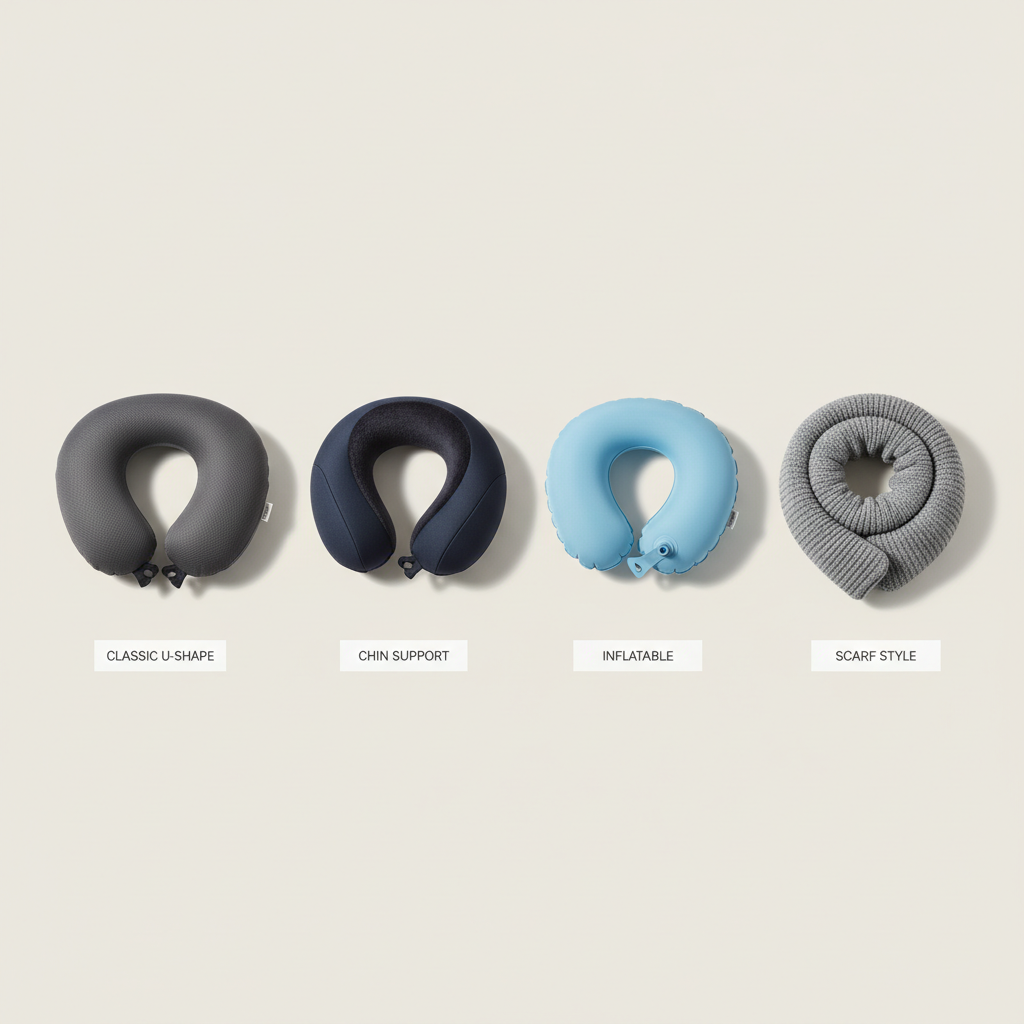
Classic U-shaped pillows
Best when you recline a bit and your head mostly falls sideways. They’re common, easy to find, and often comfortable for shorter naps, but many leave the front open so forward head-drop still happens.
Wraparound / chin-support designs
Often the most helpful for true long-haul sleep because they reduce the “chin to chest” collapse. If you’ve ever woken up with your jaw clenched or your neck kinked, this style is worth trying.
Inflatable pillows
Great for packing light and adjusting firmness, but they can feel bouncy, and the valve position sometimes creates pressure points. They work best when you’re willing to fine-tune inflation mid-flight.
Scarf-style and microbead hybrids
These can feel less bulky and more breathable. The tradeoff is that support varies a lot by brand and fill amount, so it’s smart to test whether your head is truly supported or just “resting.”
Material matters: support, heat, and “that weird smell”
Material isn’t a vibe, it’s the difference between stable support and a pillow that collapses after the first hour.
- Memory foam: stable support, good for side-tilt control, but can trap heat. Look for ventilation channels or breathable covers if you run warm.
- Polyfill: softer and lighter, usually cooler, but often compresses and loses shape during a long flight.
- Microbeads: moldable and usually cool, but can feel noisy or lumpy, and support depends on bead volume.
- Inflatable core: adjustable firmness, best for minimal luggage, but comfort depends on cover quality and exact inflation level.
If you’re sensitive to odors, airing a new pillow out for a day or two can help. If a smell persists and bothers you, it’s usually a sign to return it rather than “tough it out” on a 10-hour flight.
2026 buying guide: features that are worth paying for
Ignore the marketing adjectives and focus on features that solve real in-seat problems.
- Adjustability: toggles, straps, or wrap closures matter because your posture changes between boarding, meals, and sleep.
- Height options: removable inserts or different sizes help if you’re petite or broad-shouldered.
- Stable sidewalls: taller, firmer sides prevent the slow “lean and collapse” over time.
- Washable cover: not glamorous, but long flights plus skin oils plus cabin air is a combo you’ll notice later.
- Packability: a compression bag is nice, but don’t over-compress foam constantly, it can reduce loft over time.
Key takeaway: if a pillow only feels good when you’re standing in a store, and not when you’re sitting upright, it won’t feel good at hour six.
Comparison table: match the “best travel pillow for long flights” to your seat and sleep style
Use this as a starting point, then narrow by your priorities: support, heat, bulk, and how picky your neck is.
| Traveler profile | Best pillow type | Why it helps | Watch-outs |
|---|---|---|---|
| Head drops forward when sleeping | Wraparound / chin-support | Keeps chin from collapsing, reduces neck flexion | Can feel restrictive if too tight |
| Mostly window-seat sleeper | Classic U or scarf-style | Wall provides extra support, pillow fills gaps | U-shape may still allow forward slump |
| Runs hot, sweats easily | Breathable cover, microbead or ventilated foam | Less heat buildup over hours | Microbeads vary a lot in support |
| One-bag traveler, minimal space | Inflatable (with soft cover) | Packs tiny, firmness adjustable | Over-inflation causes pressure points |
| Neck is sensitive, gets sore fast | Structured foam with adjustable closure | More consistent support, less shifting | Bulkier to carry |
How to use a travel pillow on the plane (small tweaks, big difference)
Even the best-rated pillow can fail if it’s worn the “wrong way” for your anatomy. These are the tweaks that usually fix most complaints.
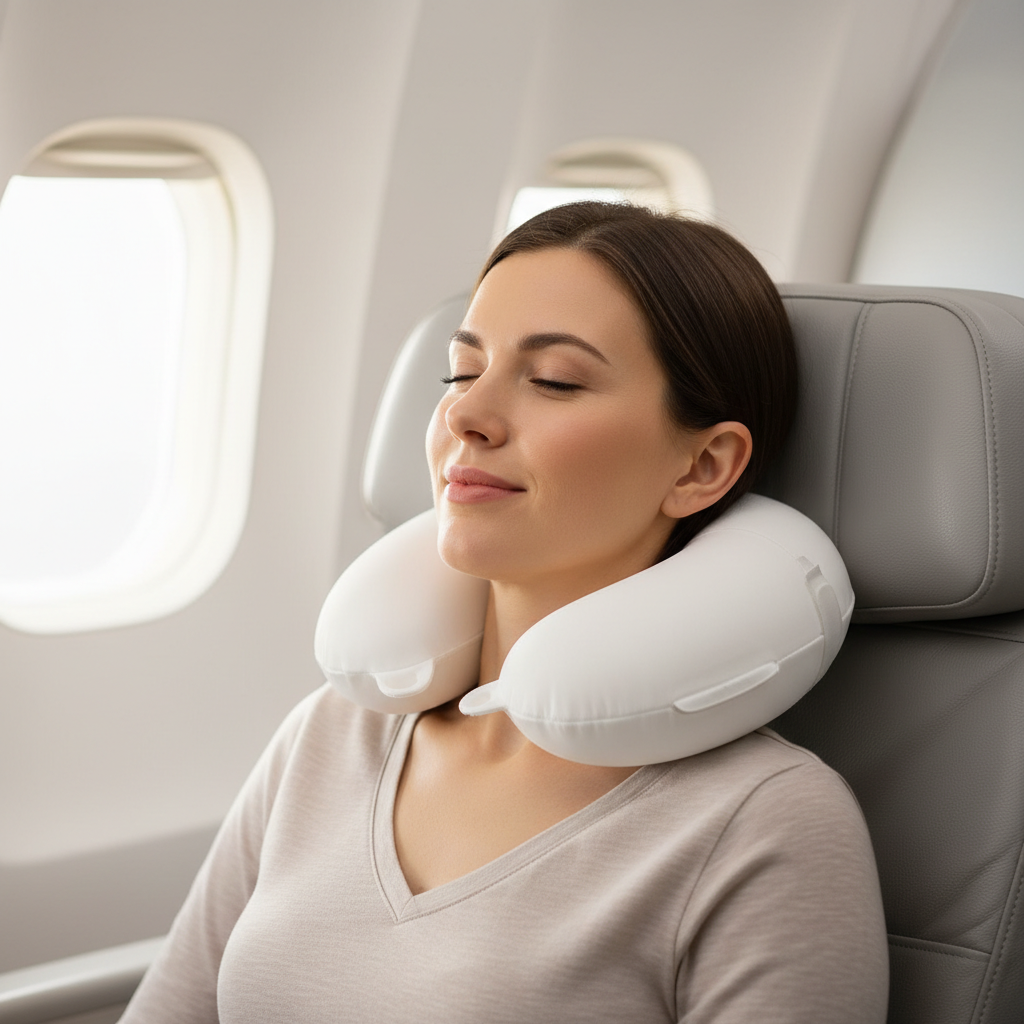
- Rotate the pillow: for classic U pillows, many people get better support by placing the opening slightly off-center, so one side supports your jaw more.
- Use the seat headrest: adjust the headrest wings if your plane has them, then use the pillow to fill gaps rather than replacing the headrest.
- Don’t cinch too tight: tight feels secure at first, but can create throat pressure and headaches during a long stretch.
- Add a hoodie or scarf: if your pillow is close-but-not-perfect, a thin layer can reduce friction and hot spots.
- Pair with lumbar support: a small roll at your lower back can reduce slumping, which reduces neck strain indirectly.
If you have a history of neck injury, nerve symptoms, or frequent headaches, it’s reasonable to be cautious. You may want to check with a clinician or physical therapist about what kind of support is appropriate for your situation.
Common mistakes that make a “good” pillow feel bad
This is the part people don’t want to hear, because it means the issue isn’t always the product.
- Buying one size: neck length and shoulder width change everything. If a brand offers sizes, that’s usually a good sign.
- Chasing softness: too-soft fill collapses, then your neck does the work again.
- Ignoring airflow: long flights magnify small annoyances, heat buildup can be the deal-breaker.
- Expecting it to fix everything: hydration, movement breaks, and posture still matter. According to FAA flyers’ guidance, moving periodically during long travel helps reduce stiffness and discomfort in many cases.
Conclusion: picking the right pillow without overthinking it
The best travel pillow for long flights is the one that matches how your head actually falls when you relax, not the one with the most hype. If you tend to fold forward, start with a chin-support style. If you tip sideways, prioritize tall, stable sidewalls. If you pack light, go inflatable but practice the inflation level before you fly.
Two actions that usually pay off: do the 30-second seated fit test at home, and pack a simple backup layer like a scarf or hoodie to fine-tune comfort mid-flight. Your neck will notice.
FAQ
- What is the best travel pillow for long flights if I can’t sleep upright?
Look for designs that prevent forward head drop, usually wraparound or chin-support styles, and combine them with a small lumbar roll to reduce slumping. - Are memory foam travel pillows safe to use for hours?
For most people they’re fine, but comfort and heat vary. If you get headaches, numbness, or worsening pain, stop using it and consider asking a professional for guidance. - Is an inflatable travel pillow actually comfortable on a long-haul flight?
It can be, especially with a soft cover, but many people over-inflate. Slightly under-inflated often feels more stable and less “springy.” - How do I keep my head from bobbing forward when I sleep on a plane?
Choose a pillow with front support, adjust the closure so it supports the jawline, and avoid letting your hips slide forward in the seat. - Window seat vs aisle seat: does it change what pillow I should buy?
Yes. Window seats let you lean on the wall, so you can get away with simpler shapes. Aisle seats usually need stronger side support because you can’t lean outward without getting bumped. - How tight should a travel neck pillow be?
Secure enough that your head doesn’t slump, loose enough that you can swallow comfortably and relax your shoulders. If you feel throat pressure, it’s too tight or the shape is wrong. - Can a travel pillow help with snoring on flights?
Sometimes better head positioning helps, but snoring has many causes. If it’s a health concern, it’s better discussed with a clinician.
If you’re trying to make long-haul flights genuinely easier, pick one pillow style that matches your sleep posture, test it in an upright chair for ten minutes, then commit for a couple trips before switching again. That small discipline usually beats buying a new “top-rated” option every time.