
How to travel with medication internationally usually comes down to three things: knowing the rules for your destination, packing in a way that survives delays, and carrying the right documents so security and customs do not have to guess what you are bringing.
If you have ever pictured a lost bag with your prescriptions inside, or a border agent questioning an unlabeled pill organizer, you already understand why planning matters. Most issues are preventable, but they are rarely fixed quickly once you are in another country.
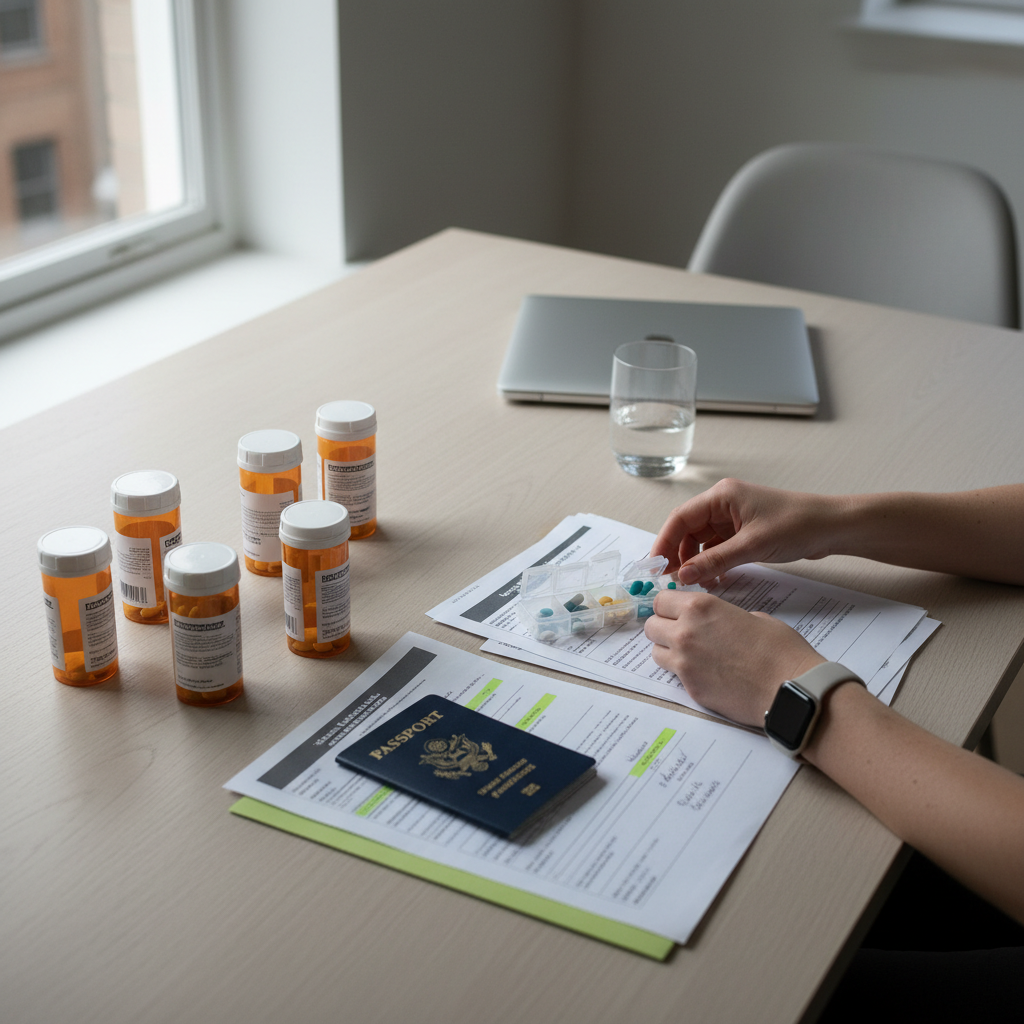
This guide focuses on practical decisions, what to pack, what to print, what to say if questioned, plus the common mistakes that create avoidable stress. It is not legal or medical advice, and if you take controlled substances or injectable meds, it is smart to confirm details with your prescriber and the destination country’s official sources.
Know the rules before you buy the ticket (yes, it can change your plan)
Countries treat medications differently. A drug that is routine in the U.S. might be restricted elsewhere, and some places limit quantities even for personal use. That is why the “I have a prescription” argument does not always solve it at the border.
- Check destination rules first, not just airline policy. Airline rules handle carry-on and screening, while the country controls import limits.
- Look for controlled substance lists and special permit requirements. Stimulants, strong pain meds, sedatives, and some ADHD medications often fall into this bucket.
- Confirm transit rules if you connect through another country. In many cases, the strictest airport you pass through becomes the real constraint.
According to the U.S. Food and Drug Administration (FDA), travelers should keep medicines in original containers and bring copies of prescriptions or a doctor’s note when traveling. That general guidance pairs well with checking your destination embassy or health ministry website for specifics.
Build a medication plan that survives real travel problems
Flight delays, reroutes, missed connections, and stomach bugs are not rare. A good plan assumes something goes sideways and still keeps you safe.
Decide what goes in your carry-on
- All prescription medications should ride in your carry-on, not checked luggage.
- Time-sensitive meds such as insulin, biologics, or certain eye drops should stay with you and be packed to handle temperature needs.
- One extra buffer is worth it when allowed, often a few extra days beyond the trip length. Rules vary, so keep it reasonable and consistent with your prescription.
Handle time zones without guessing
Many people get stuck here. For once-daily meds, moving the dose by a few hours is often fine, but some drugs are less flexible. For meds like insulin, anticoagulants, seizure meds, or steroids, timing can matter more, so ask your clinician for a travel dosing plan. Keep it written, especially if you get jet-lagged and second-guess yourself.
Pack like you expect to be questioned
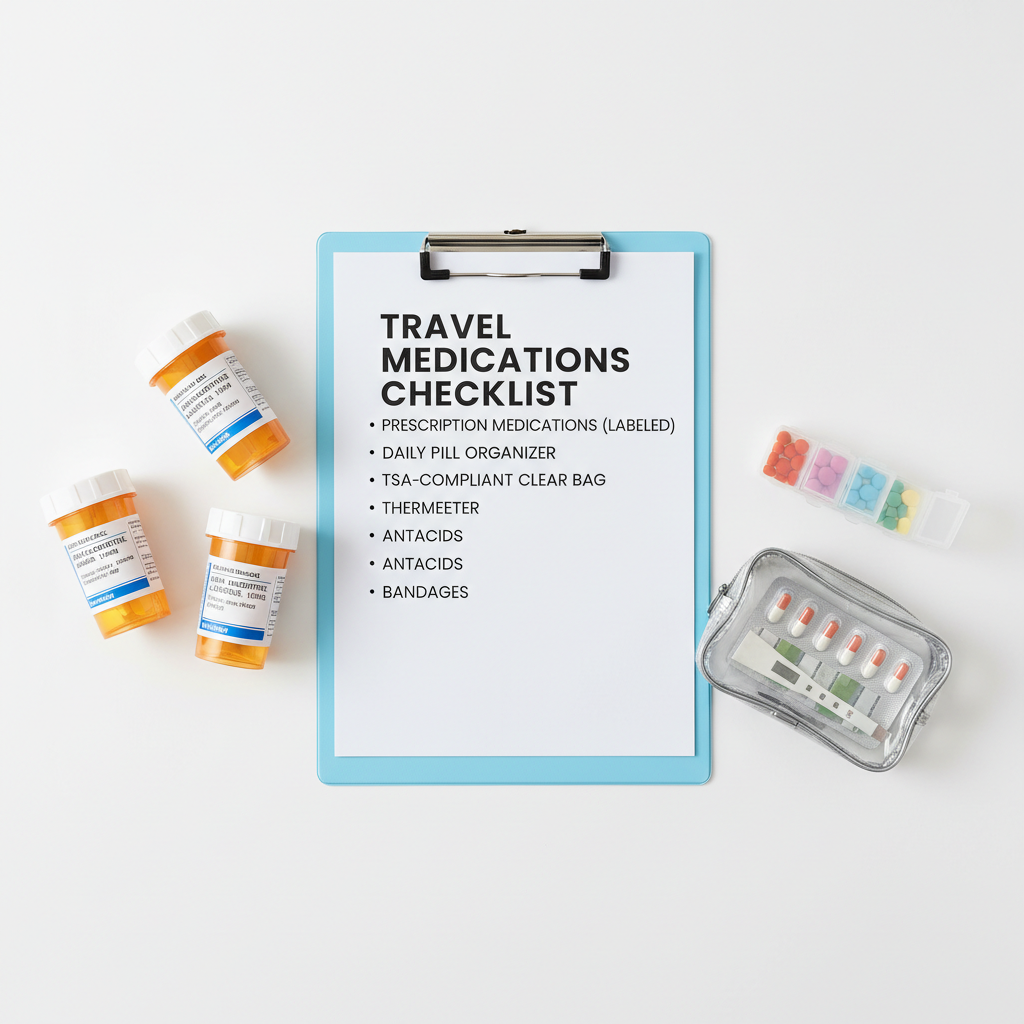
The goal is not to over-prepare, it is to remove ambiguity. When everything is labeled and consistent, you are less likely to be pulled into a long explanation.
What to keep in original packaging
- Prescriptions with controlled status (or that look “serious” at a glance).
- Injectables and devices like prefilled pens, syringes, auto-injectors, and inhalers.
- Anything with special storage instructions, since the label often helps justify the cooler pack.
When a pill organizer is okay
Pill organizers are convenient, but they can raise questions. A safer approach: keep the bulk supply in original bottles, and use the organizer only for the day of travel plus maybe one or two days. If you do use an organizer, carry a printed med list that matches what is inside.
Liquid, gel, and aerosol medications
Rules can differ by country and airport, but many security systems allow medically necessary liquids beyond typical limits, with screening. According to the Transportation Security Administration (TSA), you can bring medically necessary liquids, gels, and aerosols in reasonable quantities, but you should declare them to officers for inspection.
Documents that actually help (and the ones that don’t)
People sometimes bring a thick folder and still get stuck because none of it clearly answers: what is this medication, who is it for, and why is the quantity reasonable.
Carry these documents (digital + paper)
- A current medication list: drug name, generic name if available, dosage, your name, prescriber name, pharmacy phone.
- Prescription copies or pharmacy printouts that show your identifying info.
- Doctor letter for controlled substances, injectables, or unusual quantities, written in plain language.
- Travel insurance details and your emergency contacts.
Helpful details to request in a doctor letter
- Diagnosis category (broad is fine) and why the medication is medically necessary
- Exact medication names and strength
- Confirmation it is for personal use
- If applicable, permission to carry needles, syringes, or sharps container
What usually does not help: screenshots of online portals with partial info, or loose pills without a matching list. It can work, but it makes the conversation harder than it needs to be.
Airport security and customs: what to say and what not to do
Most travelers never have a problem, but if you do get asked, your tone and organization matter. Stay calm, answer exactly what was asked, and offer documentation without volunteering extra medical details.
- At security: declare medically necessary liquids or sharps early, keep them together in a pouch so you can pull them out quickly.
- At customs: if the country has a medication declaration requirement, follow it. If you are unsure, declaring is often safer than hoping no one asks, but follow the specific rules for that border.
- Do not repackage into unmarked bags for space-saving, especially for controlled meds.
If you are traveling with a medication that is restricted in the destination, do not try to “hide” it. That can escalate a simple denial into something much more serious. In these cases, ask your clinician about alternatives that are permitted or an official import permit process.
A quick self-check: are you in a higher-risk category?
Use this as a fast scan. If you check more than one box, you likely need a tighter plan and better paperwork.
- You take controlled substances (common examples include some ADHD meds, opioid pain meds, certain sleep meds)
- You carry injectables, needles, or a device such as an auto-injector
- Your medication requires refrigeration or stable temperature control
- You will be abroad for 30+ days or visiting multiple countries
- You have had past issues with border questions or name mismatches on labels
Practical packing table: what to do by medication type
This table is not a substitute for destination rules, but it reflects what tends to reduce friction at airports.
| Medication type | Carry-on best practice | Documents to prioritize | Extra caution |
|---|---|---|---|
| Routine tablets/capsules | Original bottle + small day-of organizer | Med list, prescription copy | Avoid loose pills in baggies |
| Controlled substances | Original bottle only, keep quantity reasonable | Doctor letter, prescription copy | Confirm legality and limits for destination and transit |
| Injectables (pens/syringes) | Dedicated pouch, include supplies and sharps plan | Doctor letter, device instructions | Declare at security if asked, pack backup supplies when possible |
| Refrigerated meds | Insulated cooler + cold packs that meet screening expectations | Doctor letter, storage requirements | Plan hotel fridge access and long layovers |
| Liquids over standard limits | Separate and declare as medically necessary | Prescription label, doctor letter if unusual | Allow extra screening time |
Real-world troubleshooting: if something goes wrong abroad
This is where having a plan pays off. If your meds are lost, stolen, or run out early, your options depend on the drug class and local rules.

- Contact your U.S. prescriber or pharmacy for documentation and advice. Sometimes they can fax or send a letter to a local clinician.
- Use your insurer’s travel assistance line if you have one. They may help locate in-network care or pharmacies.
- Visit a local clinic if you need an urgent refill. Some medications cannot be refilled across borders, and controlled drugs are especially complicated.
- Do not substitute blindly. Brand names differ internationally, and “same-looking” does not always mean same active ingredient or dose.
If you have a condition where missed doses can be dangerous, treat this as urgent and seek professional medical help quickly.
Key takeaways you can follow on your next trip
- Keep prescriptions in your carry-on, ideally in original labeled containers.
- Check destination and transit rules well before departure, especially for controlled substances.
- Bring a simple document set: med list, prescription copies, and a doctor letter when risk is higher.
- Pack for delays, including a reasonable buffer when allowed and a time-zone dosing plan from a clinician for sensitive meds.
If you want one practical next step, make your medication list tonight and store a copy in your phone plus a printed copy in your bag. It is a small task that solves a surprising number of travel problems.
FAQ
Can I bring prescription medication through customs in another country?
Often yes for personal use, but limits and restrictions vary. Check the destination’s official guidance and consider a doctor letter for controlled or injectable medications.
Do I need a doctor’s note to fly internationally with medication?
Not always. For routine prescriptions, the pharmacy label and a medication list may be enough, but a letter can reduce friction for controlled substances, needles, or large quantities.
Should I put medication in checked luggage on international flights?
In most cases, no. Checked bags can be delayed or lost, and temperature swings can be rough on certain drugs. Carry-on is typically the safer choice.
How do I travel with medication internationally if I have syringes or an auto-injector?
Keep items together, bring the prescription label and a doctor letter that mentions the device, and allow extra time for screening. If you are unsure about local rules, confirm with the destination’s health authority.
What if my medication name differs abroad?
That is common. Use the generic name and active ingredient, not just the U.S. brand name, and keep that info on your medication list to reduce confusion at pharmacies and clinics.
How much medication can I bring for a long international trip?
Many countries allow something like a 30- to 90-day supply, but it varies and controlled substances may be stricter. If you need more, ask about permits or a plan for obtaining refills legally while abroad.
Can airport security make me throw away medically necessary liquids?
According to the TSA, medically necessary liquids are permitted in reasonable quantities, though additional screening may occur. Policies outside the U.S. can differ, so arrive early and keep documentation handy.
What’s the safest way to handle time zone changes for daily meds?
It depends on the medication. For some, a gradual shift is fine, but for higher-risk drugs, ask a clinician for a written schedule so you are not improvising while jet-lagged.
If you are planning a complicated itinerary, traveling with controlled medications, or you simply want a lower-stress setup, consider asking your clinician or pharmacist to review your travel medication list and documentation before you depart, it often saves time at the airport and helps avoid preventable gaps in treatment.