
how to beat heat while traveling summer comes down to a few practical habits: plan your timing, manage hydration and electrolytes, dress for airflow, and know when heat becomes a real safety issue.
If you have ever arrived at a destination already wiped out, or found yourself paying extra for rides, bottled water, and last-minute changes because the sun felt brutal, you already know why this matters. Heat quietly drains your energy, patience, and budget, then it starts to mess with sleep and appetite, which makes the whole trip feel shorter than it is.
This guide stays grounded in what actually works on the road, airports, city walks, beach days, desert drives, theme parks, and even “mild” humid places where you sweat without noticing. You will get a quick self-check, a packing list that is not silly, and simple routines you can repeat every day.

Why summer travel heat hits harder than you expect
Heat is not just “feels hot.” In many situations your body struggles to cool itself, especially when humidity stays high, you walk more than usual, or you drink alcohol and coffee like it is a normal weekend.
- Humidity blocks sweat evaporation, so you can be soaked and still not cool down.
- Travel routines disrupt hydration, long flights, dry cabin air, and irregular meals often mean you start the day behind.
- Urban heat islands make cities hotter than forecasts suggest, pavement and buildings hold heat into the evening.
- “Vacation pace” hides exertion, you might log 15,000 steps plus stairs, plus standing in lines, without thinking.
According to CDC, hot weather can cause heat-related illnesses, and risk increases with high humidity, exertion, and limited access to cooling. That is the boring-sounding part, but in real life it shows up as headaches, nausea, irritability, or feeling oddly tired.
Quick self-check: are you at higher risk on this trip?
You do not need to be “unhealthy” to get into trouble. A lot of heat problems start with small choices stacking up across a few days.
Higher-risk situations
- You will be outdoors for hours with limited shade, festivals, national parks, theme parks.
- You are not used to the climate, dry desert heat and humid Gulf Coast both count.
- You take medications that may affect hydration or heat tolerance, if unsure, ask a clinician.
- You plan heavy drinking, or you already know you forget to drink water when busy.
- You are traveling with kids, older adults, or anyone with chronic conditions.
Early warning signs worth respecting
- Thirst, dry mouth, darker urine, dizziness, or a “hangover” feeling without the party.
- Muscle cramps, goosebumps in heat, or a sudden drop in sweating.
- Confusion, fainting, or severe symptoms, this can be urgent, seek medical help.
When in doubt, treat it like a safety issue, not a grit issue. You can always do the museum tomorrow.
Plan your day around heat, not around hope
One of the most reliable ways to learn how to beat heat while traveling summer is scheduling. Not glamorous, but it saves trips.
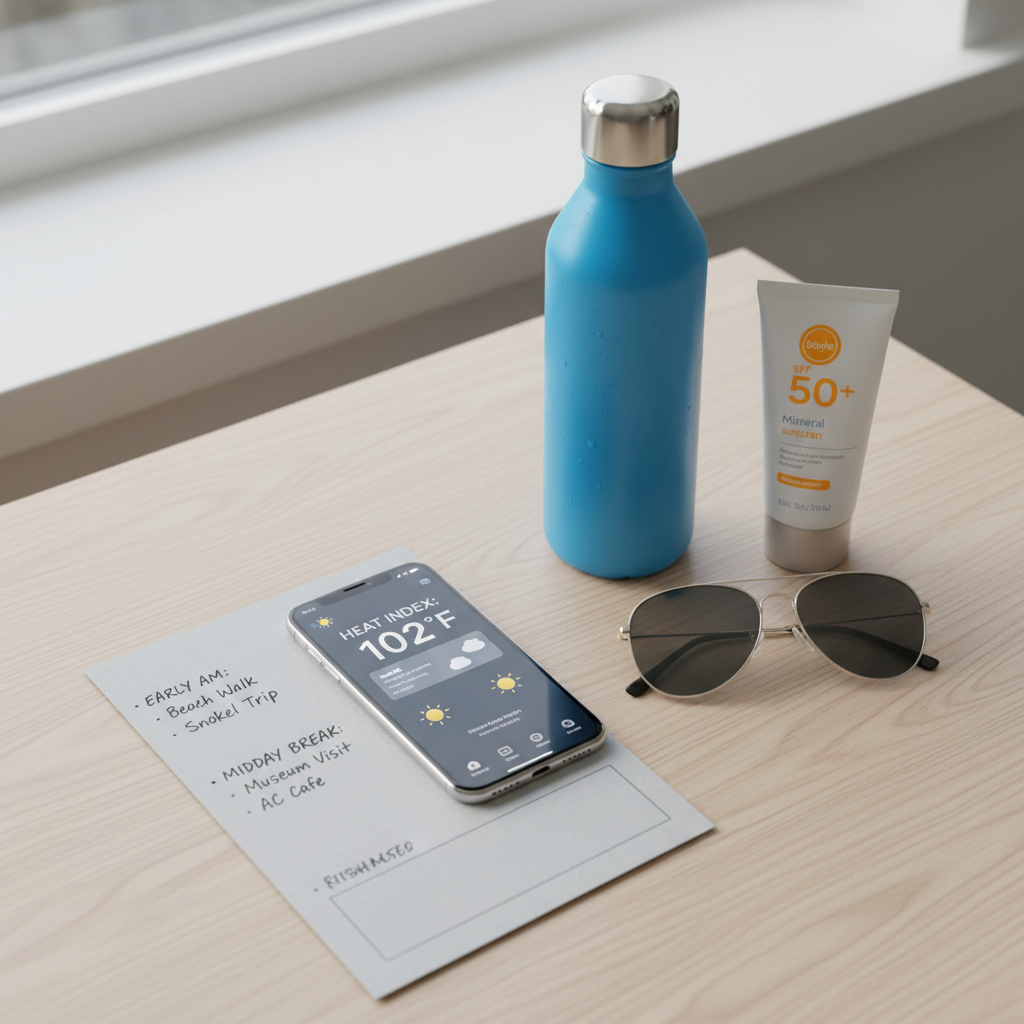
- Use a split-day itinerary: outdoor sightseeing early, midday break, then evenings for walks and photos.
- Book “cool anchors” on purpose: lunch in an indoor spot, an aquarium, a mall, a movie, a shaded park with a visitor center.
- Check feels-like, not just temperature: humidity and wind change the game.
- Build in transit buffers: waiting for rides or trains in direct sun can be the hottest part of the day.
According to National Weather Service, heat index values help estimate how hot it feels when humidity is factored in, which is often closer to what your body experiences than the temperature alone.
Hydration that actually works: water plus electrolytes
People hear “drink water” and either overdo it randomly or underdo it until they feel sick. A better target is steady intake paired with salt and food, especially if you sweat a lot.
Practical hydration rules (easy to follow)
- Start before you leave: drink with breakfast, not only once you feel hot.
- Small, frequent sips beat chugging a huge bottle once in a while.
- Add electrolytes when you sweat heavily: sports drinks, electrolyte tablets, or oral rehydration solutions can help in many cases.
- Pair fluids with food: salty snacks, soups, and balanced meals support fluid retention.
According to CDC, drinking fluids and taking breaks in cool areas are key steps to prevent heat stress, and people doing physical activity in heat may need to replace electrolytes. If you have medical conditions where salt or fluids must be restricted, it is safer to ask a professional for guidance.
Quick “am I hydrated” check
- Pee color trends pale yellow most of the day, not crystal clear, not dark.
- You are not getting headache or lightheaded when standing.
- You can sweat normally during activity.
What to wear and carry: small gear, big payoff
This is where people either overpack or bring nothing helpful. Aim for a simple kit you will actually use.
Clothing choices that cool you down
- Lightweight, breathable fabrics like linen or performance synthetics, avoid heavy cotton that stays wet.
- Loose fit helps airflow, tight clothes trap heat.
- Sun protection: wide-brim hat, UV shirt, sunglasses.
- Footwear: comfortable, ventilated shoes, blisters plus heat is a bad combo.
Carry items that earn their space
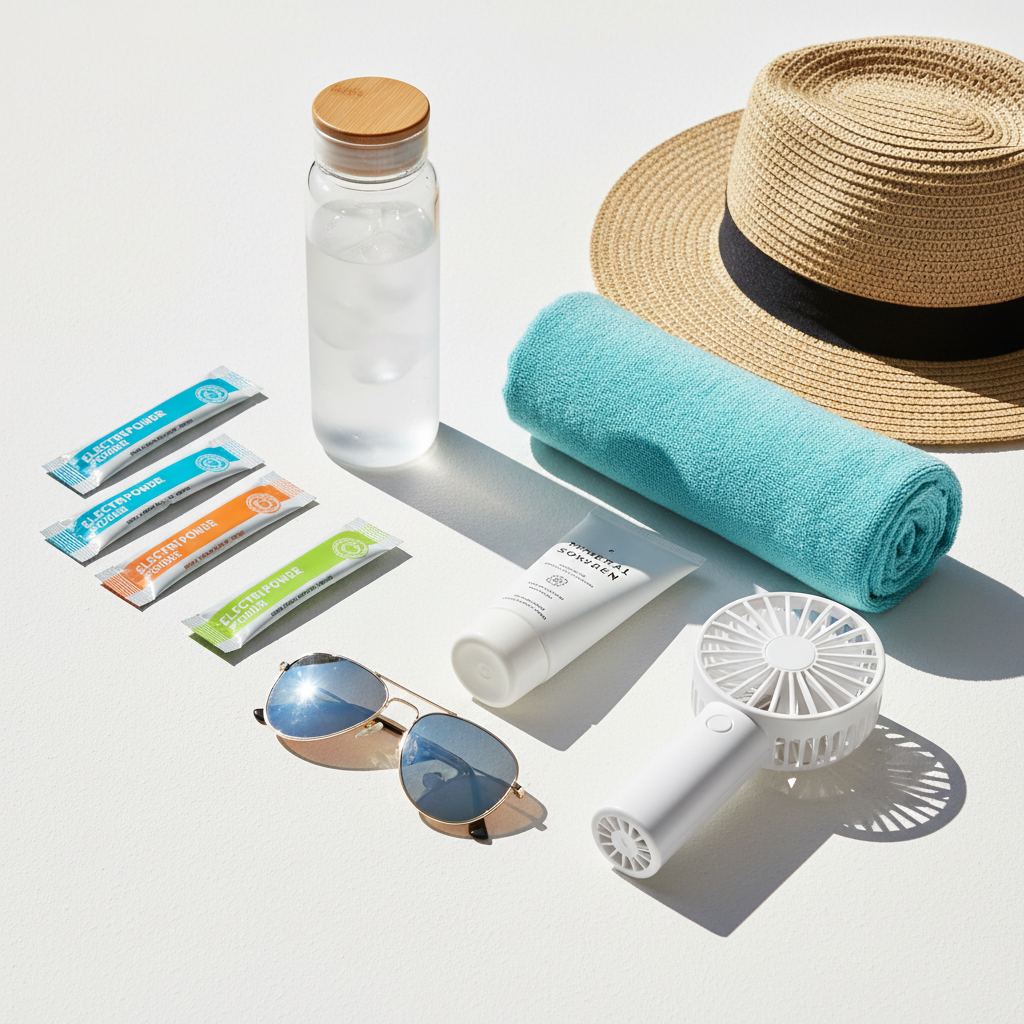
- Refillable bottle you like using, plus a backup collapsible bottle for long days.
- Electrolyte packets or tablets, easy in airports and theme parks.
- Travel-size sunscreen and lip SPF, reapply more than you think.
- Cooling towel or small bandana you can wet, low-tech but effective.
- Portable fan if you know you suffer in humid lines, not mandatory, but helpful.
According to FDA, sunscreen should be used as directed and reapplied, especially after swimming or sweating, since sunburn adds extra stress and makes it harder for your body to cool.
Smart cooling tactics for hotels, rentals, and road trips
Sometimes the heat problem is not outdoors, it is your “recovery environment.” If you cannot sleep, the next day gets worse fast.
In a hotel or short-term rental
- Cool the room early: close curtains during peak sun hours, then vent later if evenings cool off.
- Shower timing matters: a lukewarm shower before bed can help you feel cooler without shocking your system.
- Dry your gear: wet shoes and clothes make everything feel hotter the next day.
- Ask about AC limits: some properties restrict settings, it is better to know before you arrive.
In a car
- Pre-cool for a few minutes before loading kids, pets, or older travelers.
- Keep water accessible, not buried in the trunk.
- Use windshield shades and park in shade when possible, small habit, big difference.
Heat strategies by travel style (choose your lane)
Different trips need different tactics. Here is a quick table you can screenshot and follow.
| Travel style | Most common heat mistake | What works better |
|---|---|---|
| City sightseeing | Walking noon to 4 pm on pavement | Early landmarks, indoor lunch, late-night neighborhoods |
| Beach trip | Skipping shade and underestimating wind | Umbrella, SPF reapply schedule, electrolyte drink after swims |
| Theme parks | Long lines with no cooling plan | Cooling towel, refill stations mapped, ride breaks in AC shows |
| National parks | Starting hikes too late | Dawn starts, turn-around time, more water than you think |
| Road trip | No cold drinks, overheating at stops | Cooler stocked, shaded stops, short walks, steady sipping |
If you are still figuring out how to beat heat while traveling summer on a packed itinerary, pick two non-negotiables: a midday cooldown window and a hydration plan you can repeat.
Common mistakes that keep you hot (even when you try)
A lot of “it didn’t work” stories come from a few patterns.
- Only drinking plain water after hours of sweating, some people feel worse without electrolytes and food.
- Ignoring sleep, poor sleep reduces tolerance for heat and makes dehydration sneakier.
- Overplanning outdoor blocks, you can do fewer things and enjoy more of the trip.
- Saving sunscreen, sunburn is not just skin deep, it adds heat load.
- Assuming “I’m fine” is a plan, heat illness can come on faster than people expect.
When to seek help or change plans
Most travelers can manage heat with basics, but you should treat certain symptoms as a stop sign, not a suggestion.
- Get medical help urgently if someone shows confusion, fainting, seizures, very high body temperature, or stops sweating in severe heat.
- Pause and cool down for persistent dizziness, vomiting, or severe headache, especially if fluids do not help.
- Ask a clinician ahead of time if you have heart or kidney conditions, are pregnant, or take meds that may affect heat tolerance.
According to CDC, moving to a cooler place, cooling the body, and getting medical assistance for severe symptoms can be critical. If you are unsure, it is safer to err on the cautious side.
Key takeaways you can use today
Key points that usually make the biggest difference, even on a short weekend trip:
- Time your outdoors for early morning and evening, protect midday for recovery.
- Hydrate steadily and add electrolytes when sweating heavily, especially in humidity.
- Pack cooling basics you will actually use: hat, SPF, bottle, electrolyte packets, cooling towel.
- Watch for warning signs and treat them seriously, change plans before you crash.
If you want a simple action plan, choose tomorrow’s “cool window” right now, set a reminder to refill water, and decide where your indoor break happens, your future self will thank you.