
The best travel makeup bag organizer is the one that keeps liquids upright, brushes protected, and your everyday essentials visible in one quick unzip, without turning your suitcase into a glittery mess.
If you’ve ever opened a bag to find foundation leaked into your eyeshadow, or spent five minutes digging for tweezers while your Uber waits, you already know why this matters. A good organizer isn’t “extra”, it’s the difference between calm mornings and travel chaos.
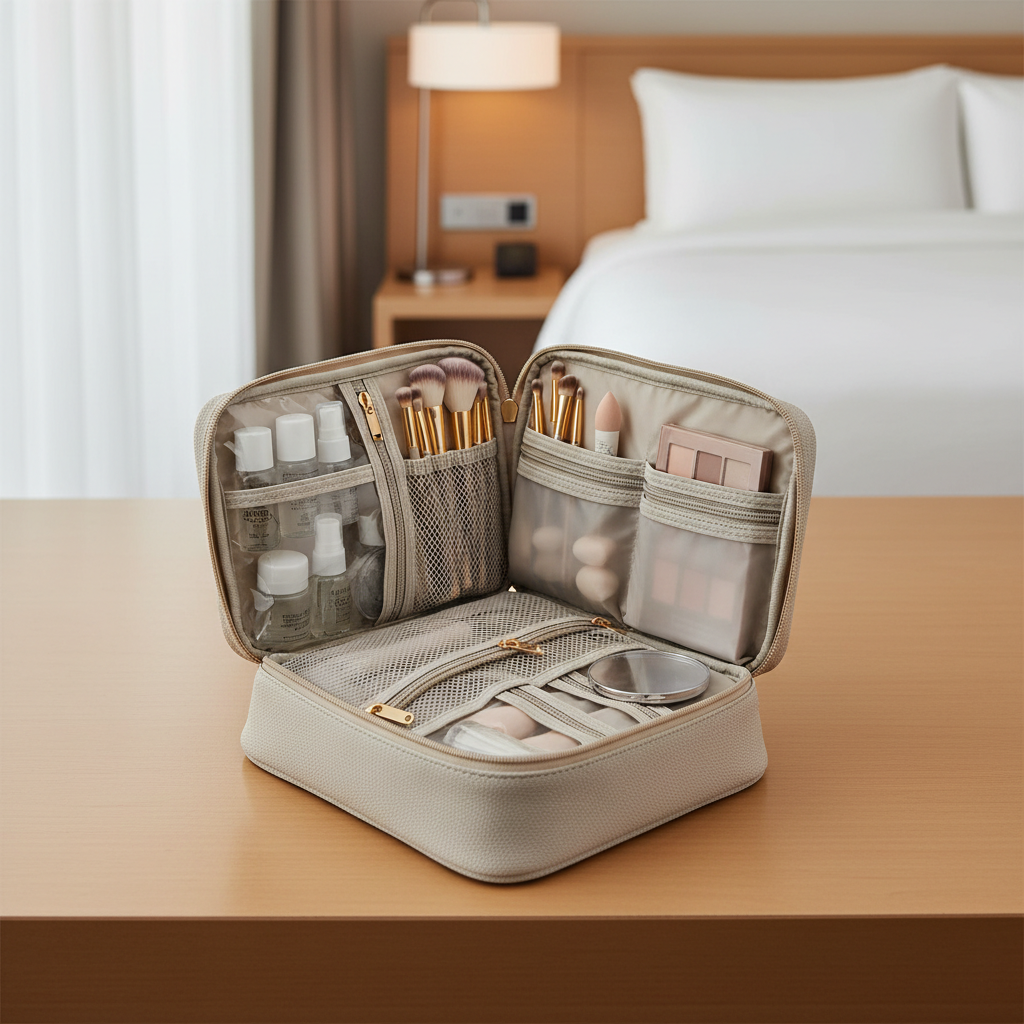
This guide focuses on what actually changes the day-to-day experience: layout, materials, cleaning, and which style fits your travel routine, weekend carry-on, long trips, or work travel. You’ll also get a quick checklist and a comparison table to narrow choices fast.
What “Best” Really Means for a Travel Makeup Bag Organizer
People shop for “best” as if there’s one winner, but with organizers it’s usually about tradeoffs: capacity vs. footprint, structure vs. flexibility, and easy-wipe lining vs. ultra-lightweight fabric.
- Speed: you can find your core items in under 30 seconds, even in dim airplane lighting.
- Spill control: liquids stay upright or contained, and seams don’t soak up product.
- Protection: powders and palettes don’t crack, brushes don’t get bent.
- Compatibility: it fits your luggage style and bathroom space, not just your vanity.
- Cleanability: you can wipe it down without babying it.
According to TSA guidelines, liquids in carry-on typically must follow the 3-1-1 rule (3.4 oz containers in a 1 quart bag). Even if you prefer checking a bag, many travelers still want a setup that can pivot to carry-on rules when needed.
Common Types (and Who They’re Actually For)
Most “organizers” fall into a few predictable shapes. The trick is choosing based on your routine, not on aesthetics alone.
Structured clamshell organizer
Best when you want a mini “drawer” effect on a counter. The shape protects powders, but it can feel bulky in a tightly packed backpack.
Hanging toiletry-makeup hybrid
Works well in small bathrooms, cruises, or shared spaces. The downside is heavy products can pull the hanger down, and tall bottles sometimes fight the pockets.
Flat pouch system (one bag + mini pouches)
Great for minimalist packers or frequent fliers who like sorting by category, lips in one pouch, complexion in another. The tradeoff is less protection for fragile powders unless you add a rigid insert.
Brush-first organizer
If brushes are your non-negotiable, a dedicated brush compartment or roll stops bristles from fraying. If you rarely use brushes on the road, you may be paying for space you won’t use.
Quick Comparison Table: Pick Your Organizer Style
Use this as a shortcut before you get pulled into endless product listings.
| Style | Best for | Main advantage | Watch-outs |
|---|---|---|---|
| Structured clamshell | Carry-on + hotel stays | Protection + visibility | Can feel bulky in smaller bags |
| Hanging organizer | Shared bathrooms | Frees counter space | Needs a reliable hook/door space |
| Flat pouch system | Minimal kits, commuting | Ultra-flexible packing | Less protection for powders |
| Brush-first design | Brush-heavy routines | Bristle protection | Brush slots can waste space |
| Clear TSA-style pouch | Liquids-focused carry-on | Easy security checks | Not great for powders and tools |
What to Look for in the Best Travel Makeup Bag Organizer (Features That Matter)
Product pages love buzzwords, but a few details tend to decide whether the organizer feels “smart” or annoying.
- Wipe-clean lining: coated polyester, TPU, or similar materials wipe down easier than raw fabric.
- Sealed seams or spill-resistant base: helps limit damage if a cap loosens mid-flight.
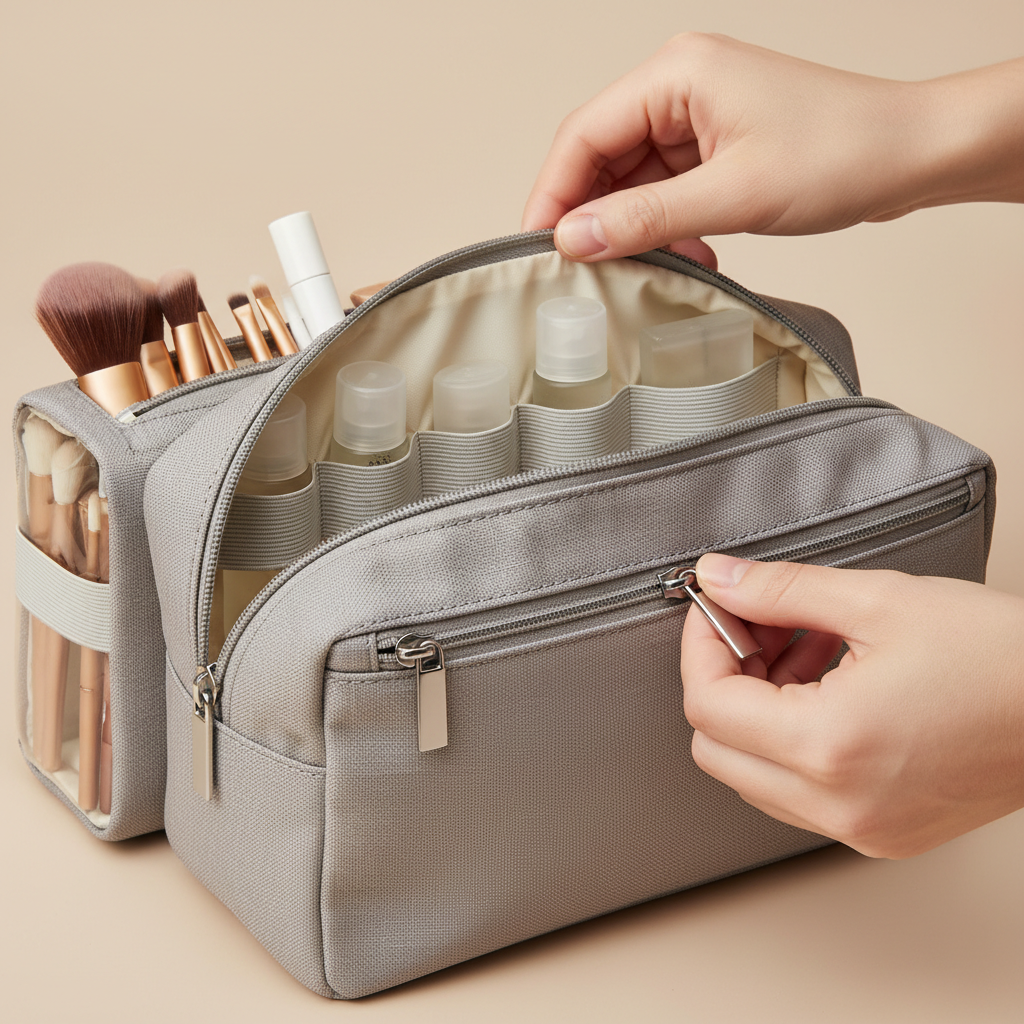
- Elastic holders for bottles: keeps skincare upright; especially helpful with serums and SPF.
- Dedicated brush cover: a flap or sleeve reduces powder transfer onto bristles.
- Two-zip access: lets you open just enough without everything spilling out.
- Reasonable hardware: zippers should glide; “pretty but flimsy” fails fast in travel.
One more thing people underestimate: depth. Deep organizers swallow items, shallow ones force you to play Tetris. If you regularly carry a foundation bottle or setting spray, depth becomes non-negotiable.
Self-Test: Which Organizer Fits Your Travel Routine?
If you’re not sure what to buy, answer these quickly. Your pattern will point to the right format more reliably than reviews.
- You do makeup in the car/plane/bathroom line → prioritize visibility, clamshell or pouch system with clear inner pockets.
- You travel with mostly skincare and SPF → choose upright bottle holders + spill-resistant base.
- You check luggage most trips → structure and protection matter more than TSA visibility.
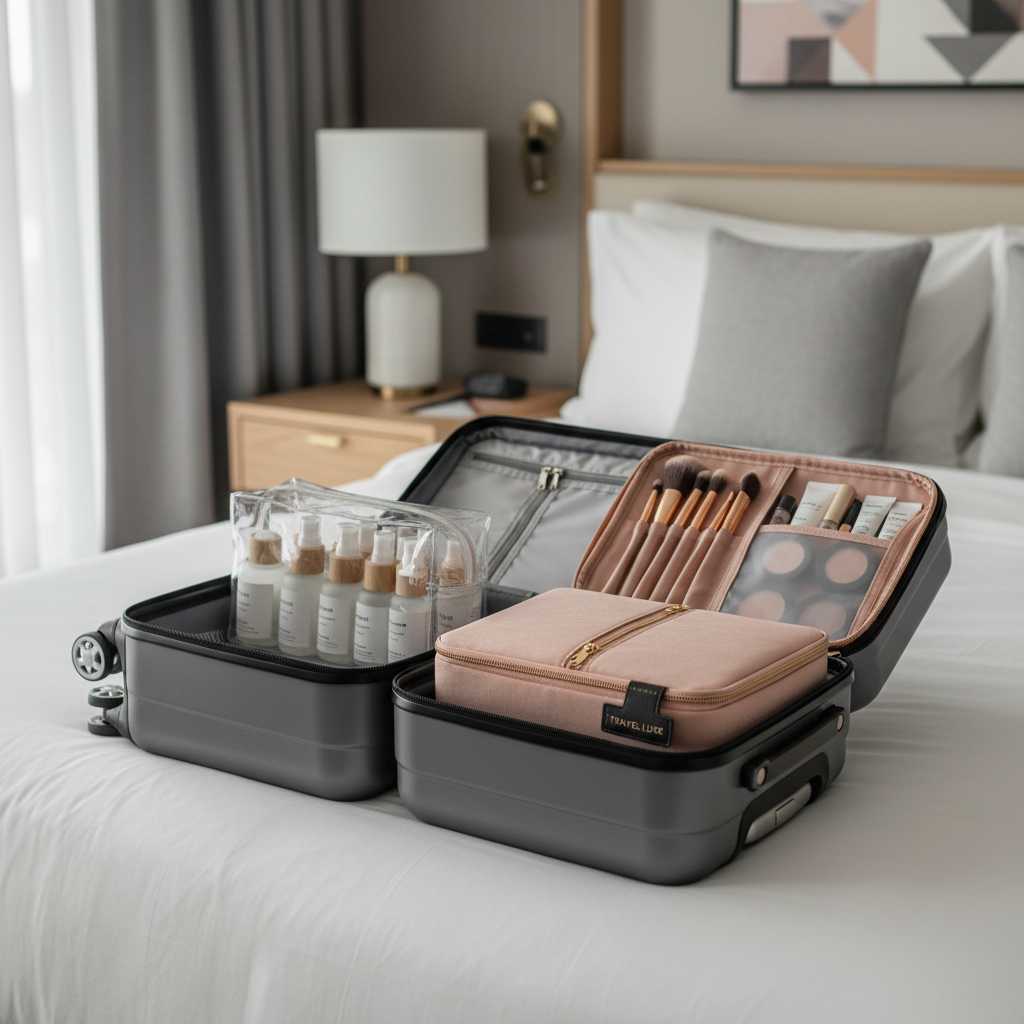
- You do carry-on only → consider a two-piece setup: TSA liquids pouch + separate makeup organizer.
- You bring 8+ brushes → brush compartment with cover, ideally removable for cleaning.
- You share bathrooms often → hanging design, but confirm hook/strap strength and pocket depth.
If two answers feel true, that’s normal. In many cases the best travel makeup bag organizer is a “system” more than a single bag, especially for people who separate liquids from powders.
Practical Setup: How to Pack It So Nothing Leaks or Breaks
Even a great organizer won’t save you from a loose pump top. This is the packing routine that usually reduces mess the most, without turning packing into a ritual.
Step-by-step packing that holds up in transit
- Decant smartly: move only what you’ll use into travel bottles, label them clearly so you don’t guess at night.
- Cap insurance: for runny liquids, add a small piece of plastic wrap under the cap, then tighten.
- Powder protection: place palettes against the structured side, not the outer wall of a soft bag.
- Brush separation: keep face brushes away from creams to avoid “mystery smudges” on bristles.
- Heaviest items low: in hanging bags, heavy bottles go at the bottom so the hook doesn’t sag.
For skin products that can irritate if contaminated, cleanliness matters. According to the American Academy of Dermatology, sharing makeup and using contaminated products can contribute to skin and eye issues, so cleaning tools and replacing old products is a sensible habit if you’re prone to irritation. If you have a history of eye infections or sensitive skin, it’s worth asking a dermatologist what’s safest for you.
Mistakes to Avoid (They Waste Space and Money)
A few patterns show up again and again when people hunt for the best organizer and still end up annoyed.
- Buying too big “just in case”: extra space invites extra products, and suddenly your bag weighs like a brick.
- Ignoring bathroom reality: a wide clamshell looks great at home, then you arrive at a tiny sink with no counter.
- Falling for micro-compartments: lots of tiny slots feel organized until you realize nothing fits your actual items.
- Assuming waterproof equals spill-proof: water-resistant fabric helps, but seams and zippers still matter.
- Skipping cleaning: powder buildup and product residue make zippers stick and pockets smell off over time.
Key Takeaways and My Practical “Best For Most People” Recommendation
If you want one purchase that covers most trips, a medium structured clamshell with wipe-clean lining, a brush sleeve, and a couple of elastic bottle loops tends to satisfy the broadest range of travelers. It’s not the lightest, but it’s usually the least annoying.
- If you fly carry-on often: pair your organizer with a separate clear liquids pouch to reduce security stress.
- If you’re a minimalist: a flat pouch system can be the best travel makeup bag organizer approach, as long as powders get some protection.
- If you live in skincare: prioritize upright storage and a spill-resistant base over extra brush slots.
Action step: pull your current travel kit out, lay everything on the counter, and circle what you used last trip. Buy an organizer that fits that list, not your fantasy routine.
FAQ
What size travel makeup bag organizer works for a 3–5 day trip?
For many people, a medium organizer fits a tight edit of daily makeup plus travel-size skincare. If you bring full-size bottles or multiple palettes, you’ll likely need either a larger bag or a two-bag setup.
Is a hanging toiletry organizer good for makeup?
It can be, especially in small bathrooms, but only if the pockets hold your items without tipping. If you carry glass bottles or heavy serums, check that the hook and stitching feel sturdy.
How do I prevent foundation from leaking in my makeup bag?
Tight caps help, but adding a barrier under the cap and storing liquids upright usually reduces leaks. If leaks keep happening, switch to more travel-friendly packaging or keep liquids in a separate pouch.
Do I need a separate bag for brushes?
Not always. If your organizer has a covered brush section, that’s often enough. Separate brush storage becomes more useful when you carry many brushes or want to isolate them from creams and powders.
What material is easiest to clean?
Coated linings and smooth synthetics wipe down faster than uncoated fabric. If you use powders heavily, pick something you can clean without scrubbing seams for ten minutes.
Can a travel makeup organizer replace my TSA quart bag?
Sometimes, but it depends on the organizer and what you pack. Many travelers still keep a clear quart-size liquids pouch to make security simpler, then use an organizer for everything else.
How often should I clean my travel makeup bag organizer?
When it starts showing residue, smells off, or after a spill. If you travel frequently, a quick wipe after trips tends to keep it from becoming a sticky, powdery project later.
If you’re trying to choose a best travel makeup bag organizer without buying three and returning two, it usually helps to list your “non-negotiables” first, liquids upright, brush protection, or a hanging hook, then filter options from there instead of shopping by looks alone.